If you have ever stood in your kitchen with grilled chicken, a bag of lettuce, and absolutely no desire to eat another sad “healthy” meal, this is for you. Hormone smart meal prep is not about turning your fridge into a row of bland containers. It is about making food decisions easier in a season of life when your body is asking for more support, not more punishment.
For many women over 45, the old rules stop working. Eating less, skipping meals, and trying to be “good” all week can backfire when blood sugar is swinging, stress is high, and hormonal shifts are changing how your body uses energy. That does not mean you are doing everything wrong. It means your meals need to work with your hormones instead of against them.
What hormone smart meal prep really means
At its core, hormone smart meal prep is simply preparing meals and meal components that help steady blood sugar, support insulin response, and keep you satisfied. That usually means each meal includes protein, fiber, healthy fats, and smart carbohydrates instead of leaning heavily on one category.
This matters in midlife because blood sugar instability tends to show up in sneaky ways. You may not think of it as a blood sugar issue when you crash at 3 p.m., crave something sweet after dinner, or feel ravenous after a “light” lunch. But those patterns often point to meals that are not giving your body enough of what it needs.
Meal prep, when done well, reduces the chance that you end up grabbing crackers, cereal, or toast because you are exhausted and need something fast. It helps you stay fed in a way that feels calm and consistent, which is exactly what many midlife bodies need.
Why traditional meal prep often fails women over 45
A lot of meal prep advice still sounds like it came straight from diet culture. Tiny portions, plain chicken, low-fat everything, and the assumption that hunger is something to outsmart. That approach can leave you underfed, unsatisfied, and more likely to overeat later.
It also ignores a basic truth. If your hormones are shifting, your body often becomes less forgiving of meals built around processed carbs, low protein, and long stretches without eating. You may have gotten away with that in your 30s. In your late 40s, 50s, and beyond, it can feel like every skipped meal comes back to haunt you.
The answer is not perfection. It is better structure. A prepped meal that includes salmon, roasted vegetables, and quinoa will usually support you better than a low-calorie lunch that leaves you hungry an hour later. A breakfast with eggs and berries often goes further than a muffin and coffee, even if the muffin looks more convenient.
How to build a hormone smart meal prep routine
The best routine is the one you will actually repeat. That means keeping it simple enough for a real week, not an imaginary one where you have endless time, energy, and motivation.
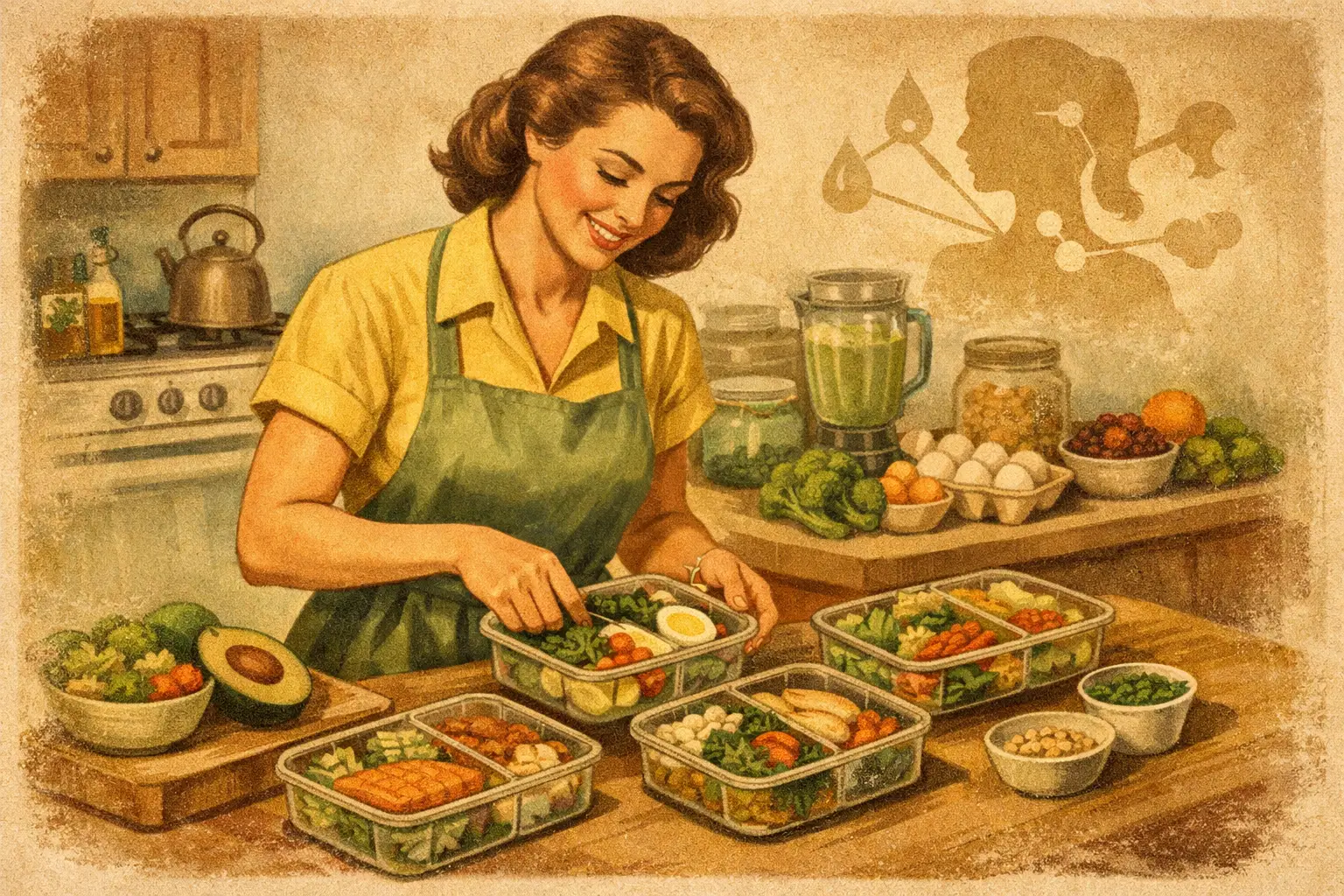
Start by thinking in components instead of full Pinterest-style meals. Prep two proteins, two vegetables, one starch, and one sauce or flavor booster. That gives you enough flexibility to build different meals without cooking from scratch every day.
Protein should lead the plan because it helps with fullness, blood sugar control, and preserving muscle, which matters even more in midlife. Good options include baked chicken thighs, turkey meatballs, salmon, hard-boiled eggs, Greek yogurt, cottage cheese, or ground turkey taco meat. If you tolerate beans well, they can work too, especially when paired with animal protein or healthy fat.
Vegetables add fiber and volume, but they do not need to be fancy. Roasted broccoli, green beans, cauliflower, Brussels sprouts, peppers, or a big container of chopped salad greens can carry a lot of your week. The goal is not to force-feed yourself vegetables. The goal is to make them easy enough that you actually eat them.
For carbohydrates, think strategic, not scared. Midlife women do not need to fear every carb, but many do better when carbs are paired with protein and fiber instead of eaten alone. Sweet potatoes, quinoa, brown rice, beans, or berries tend to be more helpful than crackers, pastries, or white pasta eaten in isolation. The right amount depends on your activity level, appetite, and blood sugar patterns. It is not one-size-fits-all.
Healthy fats help meals feel satisfying and can make simple ingredients taste like real food. Avocado, olive oil, nuts, seeds, tahini, and olives are all useful here. Just remember that more is not always better. If a meal is already rich, adding several extra fats can turn “balanced” into overly heavy.
A simple week of hormone smart meal prep
One of the easiest ways to make this work is to create mix-and-match meals. Imagine you prep lemon herb chicken, taco-seasoned ground turkey, roasted broccoli, sheet pan peppers and onions, cooked quinoa, and a batch of hard-boiled eggs. Add a yogurt-based dressing or olive oil vinaigrette, and suddenly your week gets easier.
Breakfast might be eggs with sautéed peppers and a side of berries, or Greek yogurt with chia seeds, walnuts, and cinnamon. Lunch could be a quinoa bowl with chicken, broccoli, and dressing. Dinner might be taco turkey over cauliflower rice with avocado and salsa. A snack could be cottage cheese with cucumber, or an egg with a small apple.
Notice what is missing here. There is no requirement to eat the same exact meal every day. There is no starvation. There is no gold star for being miserable. You are building meals that keep your energy steadier and reduce the frantic, what-am-I-going-to-eat feeling that leads to less supportive choices.
The biggest mistakes to avoid
The first mistake is prepping only low-calorie foods. If your meals are too small or too light, you will be hungry, and hunger is not a personal failure. It is feedback.
The second is forgetting protein at breakfast. Many women start the day with toast, fruit, or oatmeal alone and wonder why they are starving by midmorning. For some women, oatmeal works well if it is paired with protein and fat. For others, a more savory breakfast feels better. This is where paying attention matters.
The third is making meal prep too complicated. If every Sunday turns into a three-hour cooking marathon, you will eventually quit. Rotisserie chicken, frozen vegetables, bagged salad, and pre-cooked hard-boiled eggs count. Convenience can still be supportive.
The fourth is trying to prep for a perfect week. Real life includes dinners out, schedule changes, and days when leftovers are the best plan. Hormone smart meal prep should give you a safety net, not another standard to fail.
What if you are in menopause, perimenopause, or dealing with cravings?
This is where nuance matters. If you are in perimenopause, your energy and appetite may feel inconsistent from week to week. You may need a little more flexibility, especially if sleep is poor or stress is high. In menopause, some women notice they need more intentional protein and better meal timing to avoid late-day overeating.
Cravings also deserve a more honest conversation. They are not always about lack of willpower. Sometimes they show up because meals are too low in protein, too low in total calories, or too heavy on fast-digesting carbs. Sometimes they are tied to fatigue and stress. Meal prep cannot solve every hormone-related symptom, but it can remove one major trigger by helping you eat more consistently.
If sweets are your weak spot at night, look back at your day before blaming yourself. Did you eat enough protein at breakfast and lunch? Did you go too long without eating? Did dinner leave you actually satisfied? Those questions are often more useful than trying to “be stronger.”
Keep it realistic enough to last
The best meal prep system is one that supports your body and your actual life. That may mean prepping only lunches. It may mean doubling dinner so tomorrow is handled. It may mean keeping three go-to breakfasts on rotation and calling that a win.
This is the kind of support women need after 45. Not stricter rules. Not smaller salads. Better meals, better structure, and a more honest understanding of what your body is asking for now.
You are not broken, and your metabolism did not become impossible overnight. It changed. Your approach can change too. When your meals are built to steady blood sugar, support insulin balance, and keep you nourished, progress starts to feel less like a fight and more like something your body can finally work with.
If you need one place to start this week, prep one protein, one vegetable, and one balanced breakfast. That is enough to change the rhythm of your days, and sometimes that is exactly where momentum begins.
This content is for informational purposes only and is not intended as medical advice
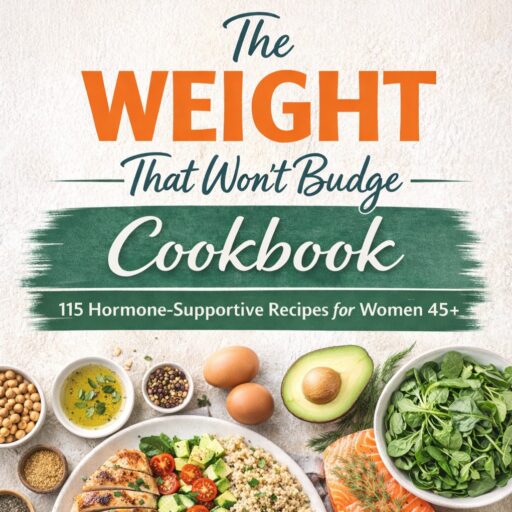
The Weight That Won’t Budge Cookbook