If your usual breakfast is toast, cereal, or just coffee, and by 10:30 you are tired, hungry, and picking through the pantry, that is not a personal failure. It is often a blood sugar problem. A healthy breakfast for hormone balance can change the tone of your entire day, especially after 45 when insulin response, cortisol patterns, and appetite cues often become less forgiving.
This is one of the biggest places women get misled. For years, the advice was to eat light, keep calories low, and choose foods marketed as healthy. But a low-protein muffin, fruit yogurt, or bowl of granola can send blood sugar up fast and then drop it just as quickly. That swing can lead to cravings, low energy, brain fog, and a body that feels like it stores everything you eat.
You are not broken. Your body is asking for a different breakfast strategy.
Why breakfast matters more for hormone balance after 45
Midlife changes more than your monthly cycle. Estrogen and progesterone shifts can affect insulin sensitivity, sleep quality, stress resilience, and where your body stores fat. At the same time, many women are dealing with more stress, less muscle mass, and poorer sleep than they had in their 30s. That combination can make a carb-heavy breakfast feel especially rough.
Breakfast does not have to be perfect, and not everyone needs to eat the second they wake up. But when you do eat, the first meal matters because it helps set your blood sugar pattern for the day. A balanced breakfast can support steadier energy, fewer cravings, better appetite control, and less of that wired-then-drained feeling that pushes you toward sugar later.
The goal is not to eat less. The goal is to eat in a way that your hormones can work with.
What a healthy breakfast for hormone balance actually looks like
A healthy breakfast for hormone balance is usually built around three things: protein, fiber, and healthy fat. That combination slows digestion, helps blunt blood sugar spikes, and keeps you full longer.
Protein is the anchor. Most women over 45 do better when breakfast includes a meaningful amount of it, not just a token spoonful of nut butter or a little milk in coffee. Eggs, Greek yogurt, cottage cheese, turkey sausage, leftover chicken, or a quality protein smoothie can all work.
Fiber matters because it helps with blood sugar control and fullness. Berries, chia seeds, flaxseed, vegetables, and oats can all contribute. Healthy fats like avocado, nuts, seeds, or olive oil also help make the meal more satisfying and steady.
This does not mean carbs are bad. It means carbs tend to work better when they show up with protein and fat. An apple by itself may leave you hungry quickly. An apple with cottage cheese or a few walnuts is a different experience.
The breakfast mistakes that keep hormones and hunger on a roller coaster
One common mistake is eating mostly sugar in the morning and calling it healthy. That includes many breakfast bars, flavored yogurts, smoothie shop drinks, cereals, and coffee drinks that seem harmless but hit like dessert.
Another mistake is skipping breakfast even though your body is clearly not handling that well. Some women feel fine waiting until lunch. Others end up shaky, irritable, overeating later, or living on caffeine until noon. It depends on your stress levels, sleep, medications, activity, and blood sugar stability. Skipping breakfast is not automatically good or bad. The real question is what happens next in your body.
A third mistake is under-eating. Half a banana and coffee is not a hormone-supportive breakfast for most midlife women. Neither is a rice cake with almond butter if you are starving two hours later. If your breakfast leaves you thinking about food all morning, it is probably not doing its job.
Best breakfast foods for hormone balance
The most helpful breakfast foods are simple, familiar, and easy to repeat. Eggs are popular for a reason. They provide protein, are easy to pair with vegetables, and can keep you satisfied without feeling heavy.
Plain Greek yogurt is another strong option because it delivers protein quickly and works well with berries, chia, flax, and a small handful of nuts. Cottage cheese fits the same category and often works well for women who want something fast but more filling than yogurt.
If you prefer a savory breakfast, leftovers count. A small plate of chicken, roasted vegetables, and avocado may support your hormones better than a bowl of cereal ever did. This is where many women find freedom. Breakfast does not have to look like traditional breakfast food.
Oatmeal can work too, but it usually works better when it is upgraded. Instead of plain oats with honey and banana, try oats cooked with chia and cinnamon, then add Greek yogurt or a scoop of protein powder on the side. That gives you more staying power and a gentler blood sugar response.
Smoothies can be helpful when mornings are rushed, but they need structure. Fruit alone is not enough. Build it with protein powder, unsweetened milk, berries, greens, flax or chia, and maybe a spoonful of nut butter. That turns it from a sugar rush into a real meal.
5 easy healthy breakfast ideas for hormone balance
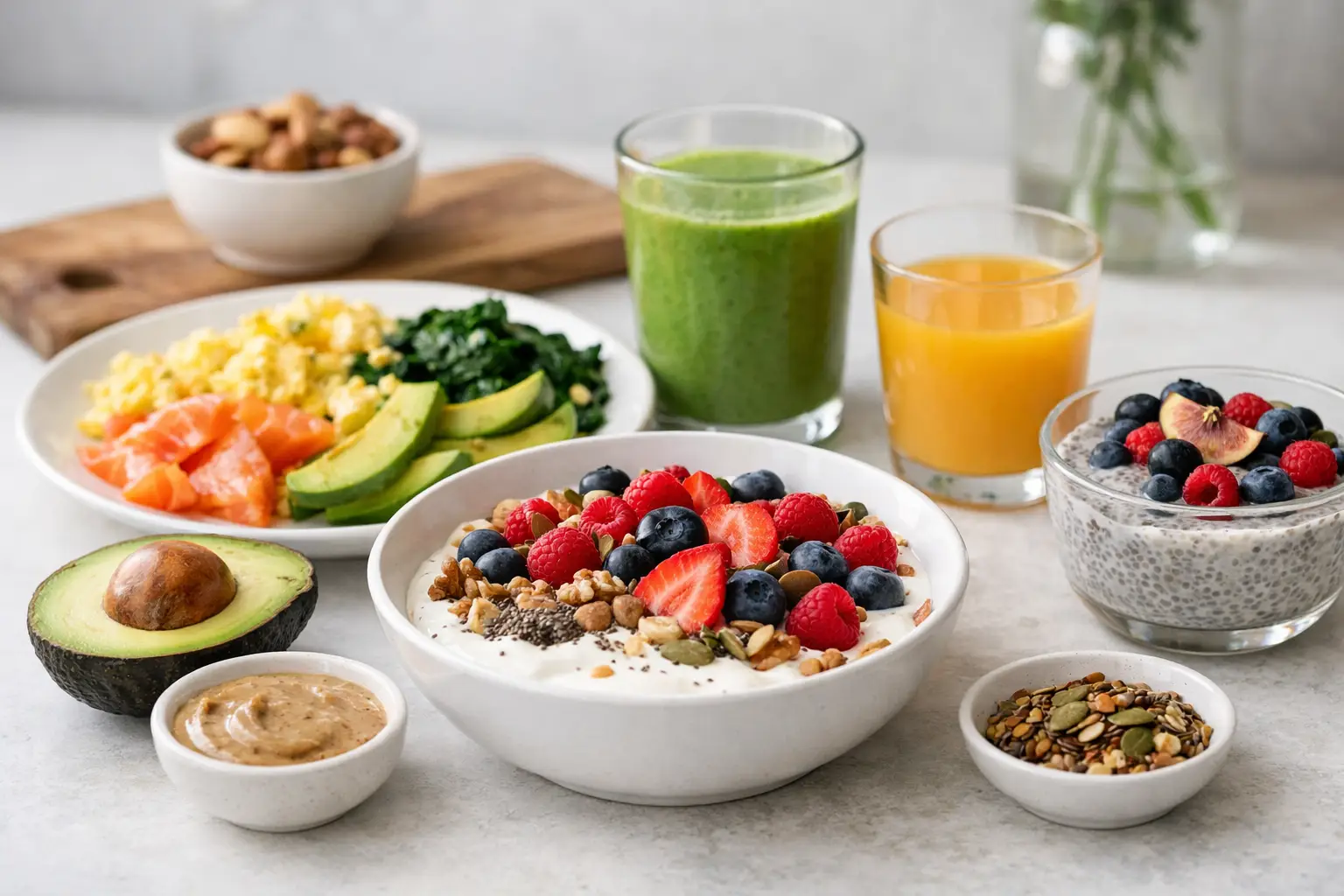
A veggie egg scramble with avocado is one of the simplest places to start. Eggs give you protein, vegetables add fiber, and avocado adds healthy fat. If you need more staying power, add a side of berries or a small piece of sprouted grain toast.
Greek yogurt with berries, chia seeds, and walnuts is fast, satisfying, and easy to repeat during busy weeks. Choose plain yogurt so you control the sweetness, and add cinnamon for extra flavor.
Cottage cheese breakfast bowls can work surprisingly well. Top cottage cheese with sliced cucumber, tomatoes, hemp seeds, and a drizzle of olive oil if you like savory foods. Or go sweet with blueberries, flaxseed, and a few pecans.
Protein oatmeal is a better fit than standard oatmeal for many women over 45. Make your oats with chia, then stir in plain Greek yogurt after cooking or pair it with two eggs on the side.
A hormone-smart smoothie can save the morning when life is chaotic. Blend protein powder, frozen berries, spinach, unsweetened almond milk, and ground flaxseed. If you are hungry again in an hour, the smoothie likely needs more protein or fat.
How to build your own hormone-smart breakfast
If you want a simple formula, think protein first. Start with eggs, Greek yogurt, cottage cheese, turkey, chicken, or protein powder. Then add fiber from produce, seeds, or oats. Finish with a healthy fat like avocado, nuts, seeds, or olive oil.
That basic structure is more useful than memorizing perfect meals. It lets you work with what you already have at home. It also makes breakfast feel doable on ordinary weekdays, which matters more than finding a fancy recipe you only make once.
You may also need to adjust portion sizes. Some women do well with a lighter breakfast and larger lunch. Others need a more substantial morning meal to avoid cravings later. Your body will tell you the truth if you pay attention to energy, mood, and hunger a few hours after eating.
When a healthy breakfast for hormone balance needs tweaking
Even a strong breakfast may need adjustment if sleep is poor, stress is high, or you are relying on caffeine to push through exhaustion. Hormones do not work in isolation. If cortisol is running the show because you are sleeping five hours a night, breakfast can help, but it cannot do everything.
It is also worth noticing whether your breakfast is truly satisfying. Sometimes the food is technically balanced, but the portion is too small. Other times, the meal needs more protein and fewer fast-digesting carbs. The answer is rarely to punish yourself by eating less. More often, it is to eat more strategically.
If you want a practical place to start, choose one breakfast and repeat it for a week. Keep it simple. Notice your energy, cravings, mood, and appetite before lunch. That kind of consistency teaches you more than jumping from one trendy breakfast idea to the next.
Midlife nutrition works better when it is realistic, not rigid. That is the approach we believe in at The Weight That Won’t Budge, because your body responds to patterns, not perfection.
A better breakfast will not fix everything overnight, but it can make the rest of the day feel far less uphill. Start with one meal that helps your body feel safe, steady, and fed, and let that be your new baseline.
This content is for informational purposes only and is not intended as medical advice
The Weight That Won’t Budge Cookbook