
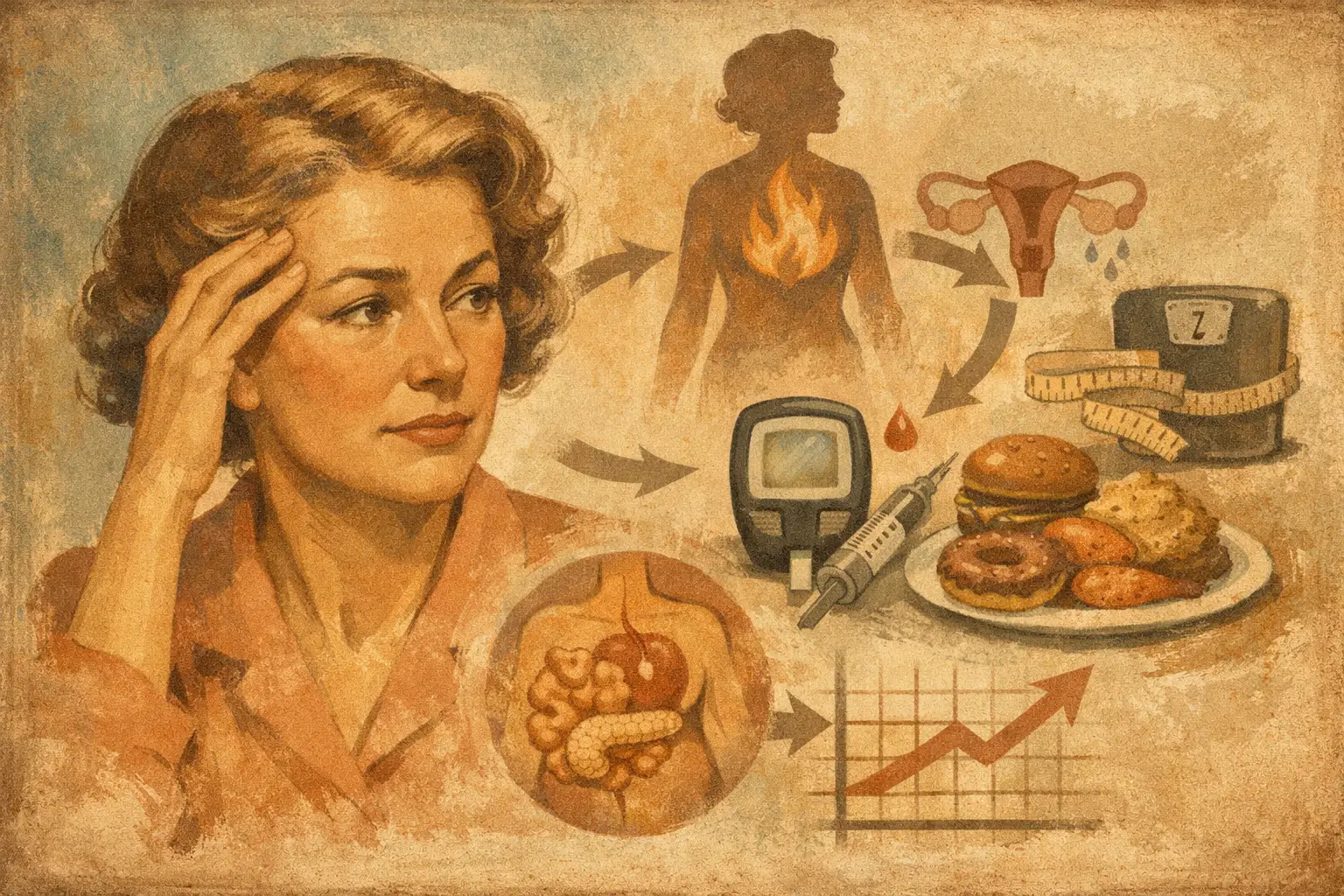
If your body started reacting differently to food somewhere in your 40s or 50s, you are not imagining it. Many women ask, can menopause cause insulin resistance, because the weight gain, cravings, fatigue, and stubborn belly fat often seem to show up at the same time hormonal changes do. That connection is real, and it has a lot more to do with physiology than willpower.
For years, women have been told to eat less, move more, and stop snacking. Then menopause hits, and those old rules suddenly stop working the way they used to. That does not mean you are doing something wrong. It means your metabolism is responding to a new hormonal environment, and insulin is often part of the story.
Can menopause cause insulin resistance?
Yes, menopause can contribute to insulin resistance. It is usually not the only cause, but it can absolutely make your body less responsive to insulin over time.
Insulin is the hormone that helps move sugar from your bloodstream into your cells, where it can be used for energy. When your cells stop responding well to insulin, your body has to make more of it. Higher insulin levels can make fat loss harder, increase hunger, and push the body toward storing more fat, especially around the midsection.
During perimenopause and menopause, estrogen levels decline and progesterone shifts as well. Those hormonal changes affect how your body handles blood sugar, where you store fat, how hungry you feel, how you sleep, and even how much muscle you keep. All of that can increase the risk of insulin resistance.
So if you have been eating the same way but gaining weight more easily, or feeling shaky, tired, or ravenous after meals that never used to bother you, there may be a metabolic reason behind it.
Why menopause changes blood sugar control
Estrogen does more than regulate your cycle. It also helps support insulin sensitivity. When estrogen drops, the body often becomes less efficient at processing glucose. Blood sugar may rise more easily after meals, and insulin may stay elevated longer.
That shift does not happen in isolation. Menopause also tends to bring a gradual loss of muscle mass, especially if strength training and protein intake are not keeping pace. Since muscle helps soak up glucose, having less of it can make blood sugar control more difficult.
Sleep disruption makes things worse. If hot flashes, night sweats, or middle-of-the-night wakeups are leaving you exhausted, your body may become more insulin resistant simply from poor sleep. Add stress on top of that, with cortisol running high, and your body gets even more signals to hold onto fat and keep blood sugar unstable.
This is why midlife weight gain often feels so unfair. It is not just about calories. Hormones, muscle, sleep, stress, and insulin are all interacting at once.
Signs menopause-related insulin resistance may be showing up
You do not need a formal diagnosis to notice that something has changed. For many women, the first clue is that their usual healthy habits stop producing the same results.
You may notice more belly fat even if your weight has not changed dramatically. You may feel tired after meals, crave sugar in the afternoon, get hungry again shortly after eating, or find that skipping meals backfires and leads to overeating later. Some women also notice brain fog, energy crashes, and a growing sense that their metabolism has slowed down.
None of these signs prove insulin resistance on their own, because thyroid issues, chronic stress, poor sleep, and other health conditions can overlap. But when these symptoms appear during perimenopause or after menopause, insulin is worth paying attention to.
It is not just menopause
Menopause can increase the risk, but it is usually part of a bigger picture. Genetics matter. So do years of dieting, low muscle mass, chronic stress, ultra-processed eating patterns, inactivity, and poor sleep.
This matters because it changes the way you respond. If menopause is one contributor among several, the goal is not to blame hormones for everything. The goal is to support the systems that menopause made more vulnerable.
That is also why one woman may breeze through menopause with very little metabolic disruption while another suddenly feels like her body is working against her. Hormonal change is universal. The way each body handles it is not.
What helps if menopause is causing insulin resistance
The good news is that insulin resistance often responds well to steady, practical changes. You do not need a punishing diet. You need a strategy that works with your midlife biology instead of against it.
Start with meals that calm blood sugar
A breakfast of toast or cereal may have worked years ago, but now it may leave you hungry and tired by 10 a.m. Building meals around protein, fiber, and healthy fats can help slow the blood sugar spike and reduce the insulin surge that follows.
That might look like eggs with sauteed vegetables and avocado, Greek yogurt with chia seeds and berries, or leftover chicken with roasted vegetables instead of grabbing something carb-heavy and quick. At lunch and dinner, anchor the plate with a solid protein source, add nonstarchy vegetables, and include a smart portion of fiber-rich carbs if they work well for you.
This is not about never eating carbs. It is about eating them in a way your body can handle better now.
Eat enough protein
Many women over 45 are under-eating protein without realizing it. That makes it harder to maintain muscle, stay full, and support blood sugar balance.
Protein needs vary, but the bigger point is consistency. A little at dinner is not enough if breakfast and lunch are mostly carbs. Spreading protein across the day often works better for appetite, energy, and body composition.
Strength train if you can
If menopause is nudging you toward insulin resistance, muscle is one of your best allies. Strength training helps your body use glucose more effectively, supports metabolism, and can improve body composition even if the scale moves slowly.
You do not need intense gym sessions to benefit. Resistance bands, dumbbells, bodyweight exercises, or a few well-structured sessions per week can make a real difference. Walking also helps, especially after meals, but it works best as part of the plan, not the whole plan.
Protect your sleep like it matters, because it does
Sleep is often treated like a bonus habit when it is really a metabolic one. Even a few nights of poor sleep can affect hunger hormones, cravings, and insulin sensitivity.
If menopause symptoms are disrupting rest, that deserves attention. Cooling the bedroom, limiting alcohol, having a consistent wind-down routine, and talking with a healthcare provider about persistent sleep issues can all help. You should not have to white-knuckle your way through chronic exhaustion.
Be careful with aggressive dieting
This is where many women get stuck. When weight gain shows up, the instinct is to cut calories harder, skip meals, or go back to the low-fat diet rules they were taught years ago. But if your body is already stressed, under-muscled, and blood sugar unstable, aggressive restriction can make the cycle worse.
You may lose a little weight at first, then rebound with stronger cravings, lower energy, and an even more frustrated metabolism. A hormone-smart approach is usually steadier. It may not feel flashy, but it is much more sustainable.
Should you get tested?
If this sounds familiar, it may be worth asking your healthcare provider about blood sugar and insulin-related testing. Fasting glucose, A1C, fasting insulin, and triglyceride patterns can offer clues, although no single number tells the whole story.
Symptoms matter too. If your labs are technically normal but you are seeing clear signs that your body is struggling with blood sugar, that is worth a conversation. Early support often works better than waiting until things become more advanced.
The real takeaway for midlife women
When women ask whether menopause can cause insulin resistance, what they are often really asking is, why does my body suddenly feel so hard to manage? That question deserves a better answer than eat less and try harder.
Menopause can shift the metabolic landscape in ways that make blood sugar regulation harder, especially when stress, poor sleep, low muscle mass, and years of inconsistent eating are layered on top. But this is not a dead end. Your body is not broken. It is asking for a different kind of support now.
At The Weight That Won’t Budge, that support starts with practical changes you can actually live with – balanced meals, enough protein, better blood sugar rhythm, and habits that respect what midlife hormones are really doing.
Give yourself permission to stop chasing outdated diet advice and start paying attention to the signals your body is giving you. Often, that is where things finally begin to change.
This content is for informational purposes only and is not intended as medical advice
The Weight That Won’t Budge Cookbook