If you have ever eaten a “healthy” breakfast, felt hungry again by 10 a.m., and then blamed yourself for snacking, this is for you. A guide to blood sugar friendly cooking starts with one reassuring truth – you are not broken. For many women over 45, the old advice to eat less, choose low-fat foods, and rely on willpower stops working because hormonal changes can make blood sugar swings hit harder.
That matters for more than cravings. When meals spike blood sugar quickly and then let it crash, energy drops, hunger ramps up, and fat loss can feel painfully slow. Blood sugar friendly cooking is not about perfection or eating like a robot. It is about building meals that keep you fuller, steadier, and better supported through midlife.
What blood sugar friendly cooking really means
At its core, blood sugar friendly cooking means combining foods in a way that slows down how quickly glucose enters the bloodstream. You do not need to fear carbohydrates, and you do not need to cut out every comfort food. The goal is to change the structure of the meal so your body gets a gentler response.
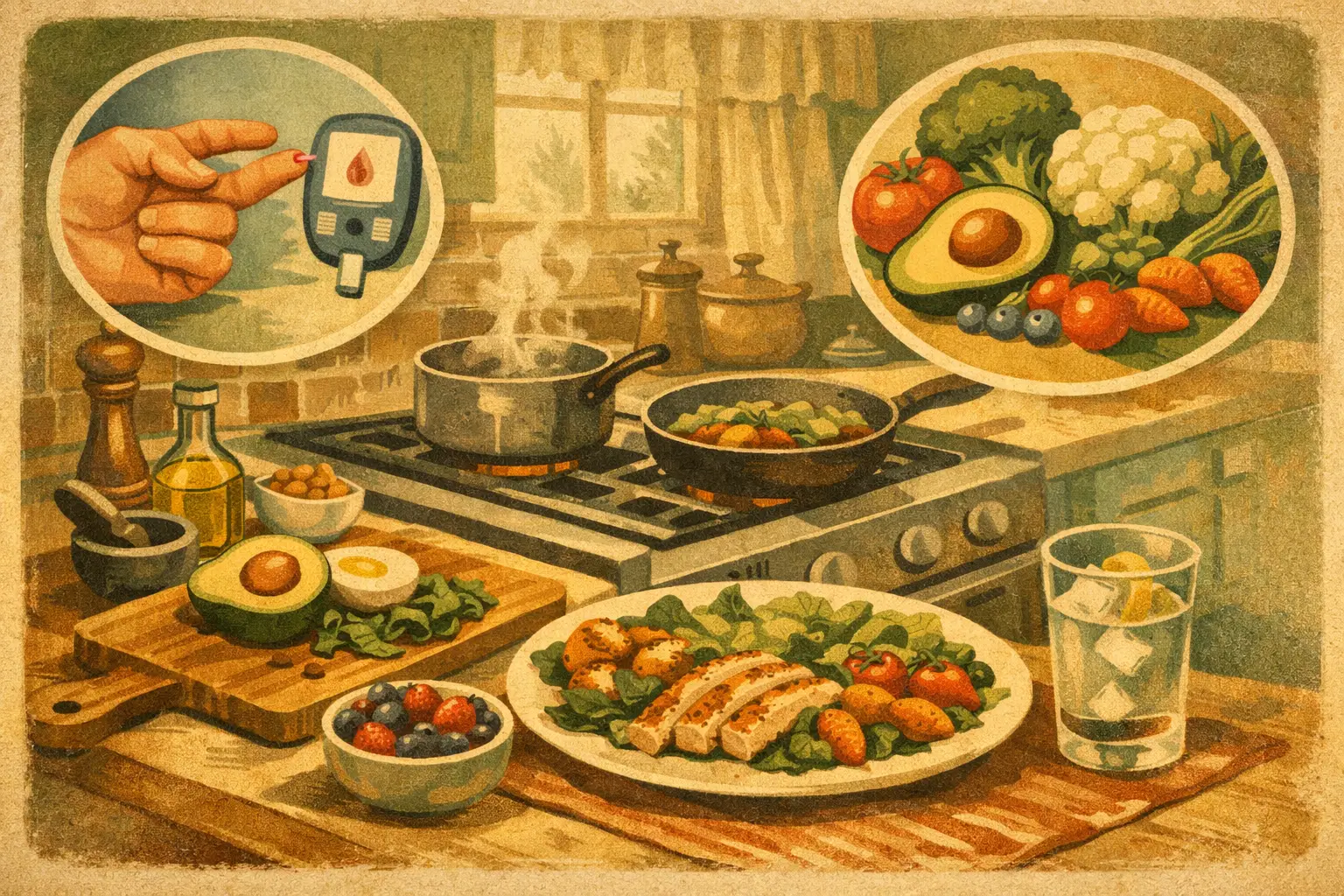
That usually means meals built around protein, fiber, healthy fat, and carbohydrates that are less refined. Think eggs with vegetables and avocado instead of toast by itself. Think salmon with roasted Brussels sprouts and a small serving of rice instead of a big bowl of plain pasta. The difference is not just the ingredient list. It is the balance.
For midlife women, this approach can be especially helpful because insulin sensitivity often changes during perimenopause and menopause. A meal that used to leave you feeling fine at 35 may leave you foggy, sleepy, or hungry at 52. That is not a character flaw. It is useful information.
The biggest cooking mistake women over 45 keep getting told to make
For years, women were told to fill up on low-fat foods, eat dry salads, and avoid satisfying ingredients. That advice often backfires. A lunch with lettuce, a few carrot shreds, and fat-free dressing may look virtuous, but it usually does not deliver enough protein or staying power.
When a meal is too light, too low in protein, or mostly starch, blood sugar can rise and fall fast. Then the afternoon cravings show up, and suddenly the issue gets framed as poor discipline. It is not poor discipline. It is poor meal construction.
Blood sugar friendly cooking is more honest than diet culture. It says your meals should work for your biology, not against it. That means adding substance, not just removing calories.
A practical guide to blood sugar friendly cooking at home
The easiest way to cook for steadier blood sugar is to start with protein first. Before you think about rice, potatoes, pasta, or bread, ask what the protein is. Chicken, turkey, salmon, tuna, Greek yogurt, cottage cheese, eggs, tofu, shrimp, and lean beef can all work. Protein helps slow digestion and supports fullness, which is a big deal when hunger feels louder than it used to.
Next, add nonstarchy vegetables. This is where fiber and volume come in. Broccoli, green beans, zucchini, cauliflower, leafy greens, mushrooms, peppers, asparagus, and cucumbers all help make meals more satisfying without causing the fast rise that comes from heavily refined carbs alone. Roasting, sauteing, air frying, and sheet pan cooking all make this easier than trying to live on raw vegetables.
Then add a smart carbohydrate portion. This is where many women get confused. Blood sugar friendly does not mean carb-free. It means intentional. Beans, lentils, sweet potatoes, berries, quinoa, oats, and rice can all fit. The question is how much, what kind, and what you eat them with. A small serving of rice next to salmon and vegetables is very different from a large bowl of rice eaten on its own.
Finally, include some healthy fat. Olive oil, avocado, nuts, seeds, olives, tahini, and full-fat dairy in reasonable amounts can help meals feel satisfying and slow the pace of digestion. If you have spent years fearing fat, this can take some mental rewiring. But meals that satisfy you are usually easier to stick with than meals that leave you hunting for snacks an hour later.
Ingredient swaps that help without making food miserable
You do not need specialty foods or a kitchen full of powders. A few simple swaps can make everyday cooking much more blood sugar friendly.
If breakfast is usually toast or cereal, try eggs with sauteed vegetables, Greek yogurt with chia and berries, or cottage cheese with walnuts and cinnamon. If lunch tends to be a sandwich and chips, keep the sandwich if you love it, but use a higher-protein filling, add crunchy vegetables, and skip the side that adds little but quick starch. If dinner is pasta-heavy, keep the pasta portion smaller and bulk up the plate with meatballs, grilled chicken, shrimp, or turkey sauce plus a generous side of vegetables.
This is where trade-offs matter. Brown rice is often better for steadiness than white rice, but portion and pairing still matter more than food labels alone. A giant bowl of brown rice can still push blood sugar higher than your body handles well. On the other hand, a modest serving of white rice eaten with protein, vegetables, and fat may work just fine for you. It depends on the full meal and your individual response.
Blood sugar friendly cooking when life is busy
Most women over 45 are not sitting around waiting to make elaborate wellness meals. You are working, caring for people, juggling appointments, and trying to keep your own health from falling to the bottom of the list. Blood sugar friendly cooking has to work on ordinary Tuesdays.
That is why repeatable meals are so useful. A sheet pan of chicken thighs and vegetables. Taco bowls with seasoned ground turkey, lettuce, salsa, black beans, and avocado. Egg muffins with spinach and feta. Salmon patties with slaw. Greek yogurt bowls with seeds and berries. None of these are glamorous, but they are realistic.
Batch-cooking proteins can save you from the 5 p.m. panic that leads to crackers, takeout, or random snacking while dinner comes together. Wash and chop vegetables ahead of time if that helps, but do not turn prep into a second job. Even keeping frozen vegetables, pre-cooked chicken, canned salmon, eggs, and bagged salad on hand can be enough to build better meals fast.
What to watch out for in so-called healthy foods
Some foods get a health halo they do not deserve. Smoothies can be one example. A smoothie made with protein powder, unsweetened milk, spinach, nut butter, and berries may work well. A smoothie made with fruit juice, banana, mango, honey, and no meaningful protein can hit more like dessert.
Granola, oat milk drinks, low-fat flavored yogurt, protein bars, and gluten-free snack foods can create the same problem. They are not automatically bad, but many are much easier to overeat and much less filling than they seem. Read labels with one question in mind: will this actually keep me steady, or is it just dressed up convenience food?
How to build a plate without overthinking it
If you want one simple framework from this guide to blood sugar friendly cooking, use this: anchor every meal with protein, add plenty of fiber-rich vegetables, include a moderate portion of carbs, and finish with a little healthy fat. That one shift can change a lot.
At breakfast, that might look like eggs, sauteed spinach, and a side of berries. At lunch, it could be grilled chicken over salad with avocado and a small scoop of quinoa. At dinner, maybe it is baked cod, roasted green beans, and a half sweet potato with butter or olive oil.
You do not need every meal to be perfect. You just need more meals that help your body feel stable instead of stressed.
When blood sugar friendly cooking needs to be more personalized
Some women do well with oatmeal, beans, and fruit. Others notice they are hungrier after those foods, even in reasonable portions. Some feel best with a savory breakfast. Others can tolerate more carbohydrates after a strength workout or a long walk.
That is why paying attention matters more than following internet rules. Notice your hunger, energy, cravings, mood, and sleep after meals. If you feel shaky, ravenous, sleepy, or snacky soon after eating, the meal may need more protein, more fiber, or fewer fast-digesting carbs. Your body gives feedback. It is worth listening.
The Weight That Won’t Budge is built on this idea – women in midlife need practical strategies that respect how their bodies have changed, not recycled diet advice from 1998.
Blood sugar friendly cooking is not punishment, and it is not another food obsession to add to your plate. It is a calmer way to eat that helps your meals support your energy, hormones, and real life. Start with one meal, one grocery trip, or one better breakfast. Small shifts done consistently tend to work far better than dramatic plans you cannot live with.
This content is for informational purposes only and is not intended as medical advice
The Weight That Won’t Budge Cookbook