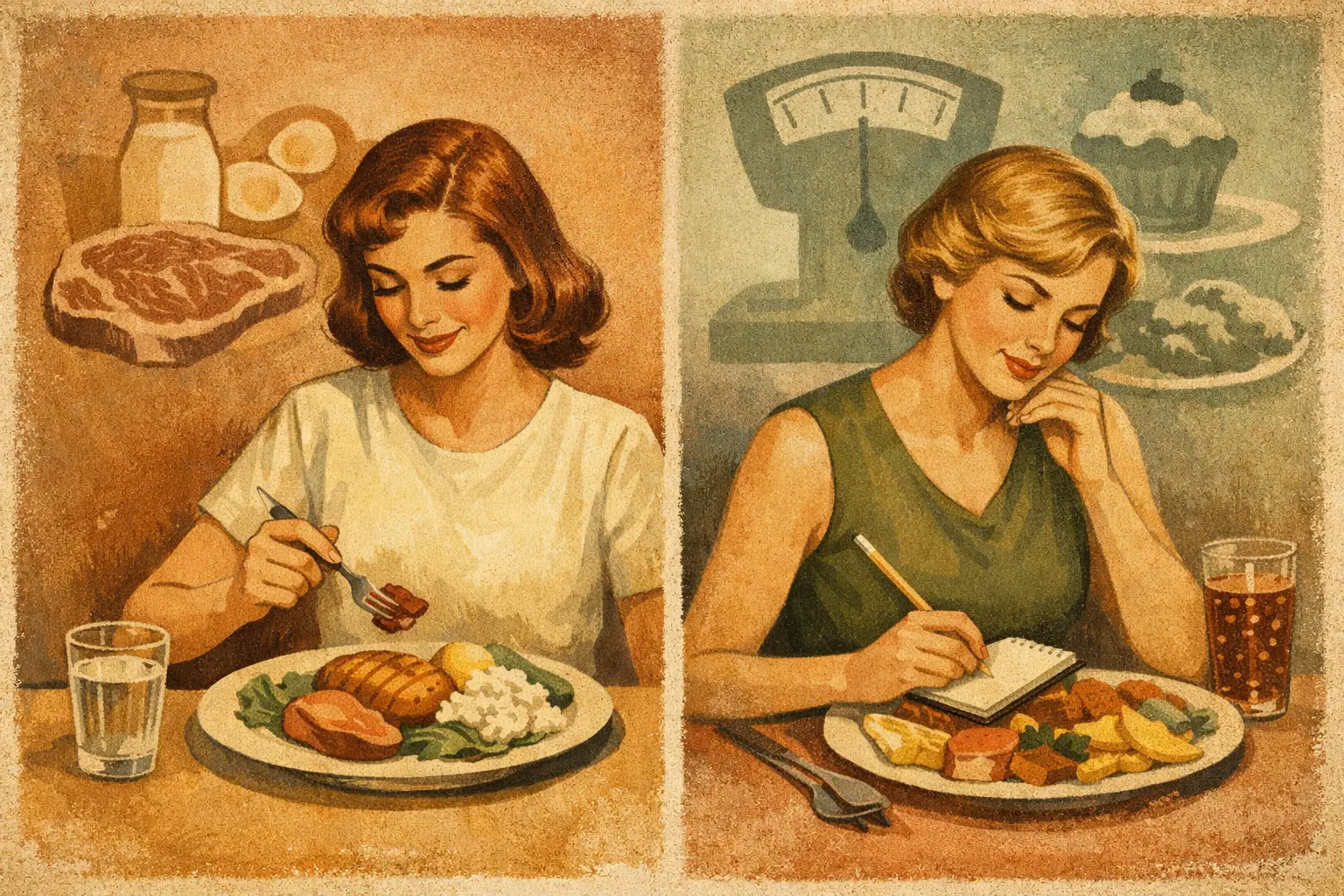
If you have ever eaten 1,200 calories, skipped the bread basket, ordered the salad, and still watched the scale refuse to move, you are not imagining things. For many women, protein first eating versus calorie counting becomes a very real question after 45, because the old advice to simply eat less often stops matching what your body is actually doing.
This is where a lot of frustration begins. You follow the rules, you stay “good,” and somehow your energy drops, your cravings get louder, and the weight still hangs on. That does not mean you are failing. It usually means your body needs a different kind of support.
Why this debate matters more after 45
In midlife, weight loss is rarely just a math problem. Hormonal shifts can change how your body handles blood sugar, stores fat, builds muscle, and recovers from stress. Estrogen changes, declining muscle mass, poor sleep, and rising insulin resistance can all make traditional calorie-focused dieting feel harder than it used to.
That is why calorie counting alone can backfire. If cutting calories leads you to eat less protein, less fiber, and less food overall, your body may respond with more hunger, lower energy, and less muscle support. You may technically be eating less, but not in a way that helps your metabolism feel safe and steady.
Protein-first eating takes a different angle. Instead of asking, “How little can I eat?” it asks, “How can I build meals that keep blood sugar steadier, support muscle, and help me stay satisfied?” For women over 45, that shift can feel like a relief.
What protein-first eating actually means
Protein-first eating does not mean living on chicken breasts and protein shakes. It means making protein the anchor of your meals and snacks so the rest of your plate works better for your body.
In practical terms, that often looks like eating eggs before toast at breakfast, choosing Greek yogurt over a granola bar in the afternoon, or making sure your dinner includes salmon, chicken, turkey, cottage cheese, tofu, or another solid protein source before you build around starches or sweets.
The goal is not perfection. The goal is to stop building meals that leave you hungry an hour later.
When you eat protein first or make it the main event, a few helpful things tend to happen. You often feel fuller, your meal has more staying power, and blood sugar tends to rise more gradually than it does with a carb-heavy meal eaten on its own. For women dealing with stubborn weight, cravings, and energy crashes, that can make a noticeable difference.
What calorie counting gets right – and where it falls short
To be fair, calorie counting is not useless. Body weight is affected by energy balance, and calories do matter. If someone routinely overeats even healthy foods, awareness of portions and total intake can help.
But calorie counting has a big weakness. It treats all calories as if they affect your body the same way in real life. A 400-calorie breakfast of pastry and coffee is not likely to support your hunger, energy, or blood sugar the way a 400-calorie breakfast with eggs, berries, and Greek yogurt might.
That difference matters even more in midlife. If a calorie target pushes you to choose low-calorie foods that do not keep you full, you may end up white-knuckling hunger all day and overeating later. You can also miss the bigger picture – insulin response, muscle preservation, satiety, and the quality of your meals.
Many women have spent years counting calories while accidentally under-eating protein. That can be one reason the scale stalls while body composition worsens. You may lose some weight, but also lose muscle, feel depleted, and regain the weight more easily.
Protein first eating versus calorie counting: which works better?
For most women over 45, protein first eating versus calorie counting is not really a contest between two equal strategies. One is often more helpful as a foundation, and the other may be useful as a tool.
Protein-first eating usually works better as the starting point because it addresses the things that commonly go sideways in midlife: poor satiety, muscle loss, blood sugar swings, and meals that look light but leave you starving. It helps you eat in a way that supports your metabolism instead of fighting it.
Calorie counting can still have a place, but it tends to work best after meal quality is in place, not before. If you are eating balanced, protein-rich meals and still not seeing progress, a gentle look at portions may help. But if you start with restriction alone, you may just create another exhausting diet cycle.
This is an important distinction. You do not need more food rules. You need a structure that makes your body easier to work with.
Why protein matters so much in menopause and midlife
Protein is not just about weight loss. It helps support lean muscle, and that matters because muscle is metabolically active tissue. As women age, muscle naturally declines unless there is a reason for the body to keep it. Eating enough protein, along with strength training, gives your body that reason.
Protein also helps with fullness. If you are constantly hungry, it becomes much harder to stay consistent with any plan. That is not a motivation problem. That is biology doing what biology does.
Then there is blood sugar. Meals built around refined carbs alone can lead to a faster spike and drop, which often feels like fatigue, brain fog, shakiness, irritability, or intense cravings later. A protein-centered meal can soften that roller coaster.
This is one reason so many women feel better when they stop nibbling on crackers, toast, or fruit alone and start pairing those foods with protein. The food is not the enemy. The missing balance is the issue.
The trade-offs to know before choosing either approach
Protein-first eating is often simpler and more sustainable, but it is not magic. You can still overeat highly processed protein bars, giant restaurant portions, or calorie-dense foods while telling yourself you are prioritizing protein. If your portions are consistently far beyond what your body needs, progress may still stall.
Calorie counting offers data, but it can become mentally draining fast. For some women, it increases stress, rigidity, and the feeling that every bite needs to be earned. That kind of pressure is hard to sustain and can make eating feel adversarial.
It also depends on your personality. Some women like numbers and feel calmer with a clear target. Others become obsessive, discouraged, or burned out. If tracking makes you more anxious and less connected to hunger and fullness, it may not be your best long-term strategy.
The middle ground is often the most useful. Let protein lead, keep meals balanced, and use calorie awareness only if needed, not as your entire system.
How to use a protein-first approach in real life
Start with breakfast, because it sets the tone for the day. If your morning meal is mostly carbs, such as toast, cereal, muffins, or fruit alone, you may be hungrier and more snacky by mid-morning. A better move is eggs with fruit, Greek yogurt with chia seeds and berries, or cottage cheese with a few nuts and sliced apple.
At lunch and dinner, build your plate around a protein source first, then add vegetables, healthy fats, and a reasonable portion of carbs. That could be grilled chicken over a big salad with roasted sweet potatoes, salmon with green beans and rice, or taco bowls with ground turkey, black beans, salsa, avocado, and lettuce.
For snacks, think stability instead of convenience alone. A cheese stick with fruit, turkey roll-ups, edamame, or plain Greek yogurt will usually carry you farther than pretzels or a handful of dry cereal.
You do not have to hit perfection at every meal. You are just trying to make it easier for your body to feel fed, steady, and less desperate.
When a calorie deficit still matters
A hormone-smart approach is not the same as pretending calories do not count. If fat loss is your goal, you still need some level of calorie deficit over time. The difference is how you create it.
The most sustainable deficit is usually the one that happens because your meals keep you fuller, your cravings calm down, and you are no longer caught in the cycle of eating too little early and too much later. Protein-first eating often helps create that naturally without the constant mental math.
That is very different from slashing calories and hoping your body cooperates.
If you have been stuck for a while, start by asking a better question. Not “How can I eat less?” but “How can I eat in a way that supports my hormones, my muscle, and my appetite?” That is often where the shift begins.
You are not broken, and you are not failing because calorie counting stopped working the way it once did. Midlife asks for a smarter strategy, not a stricter one. Sometimes the most helpful change is simply giving your body what it has been missing first.
This content is for informational purposes only and is not intended as medical advice
The Weight That Won’t Budge Cookbook