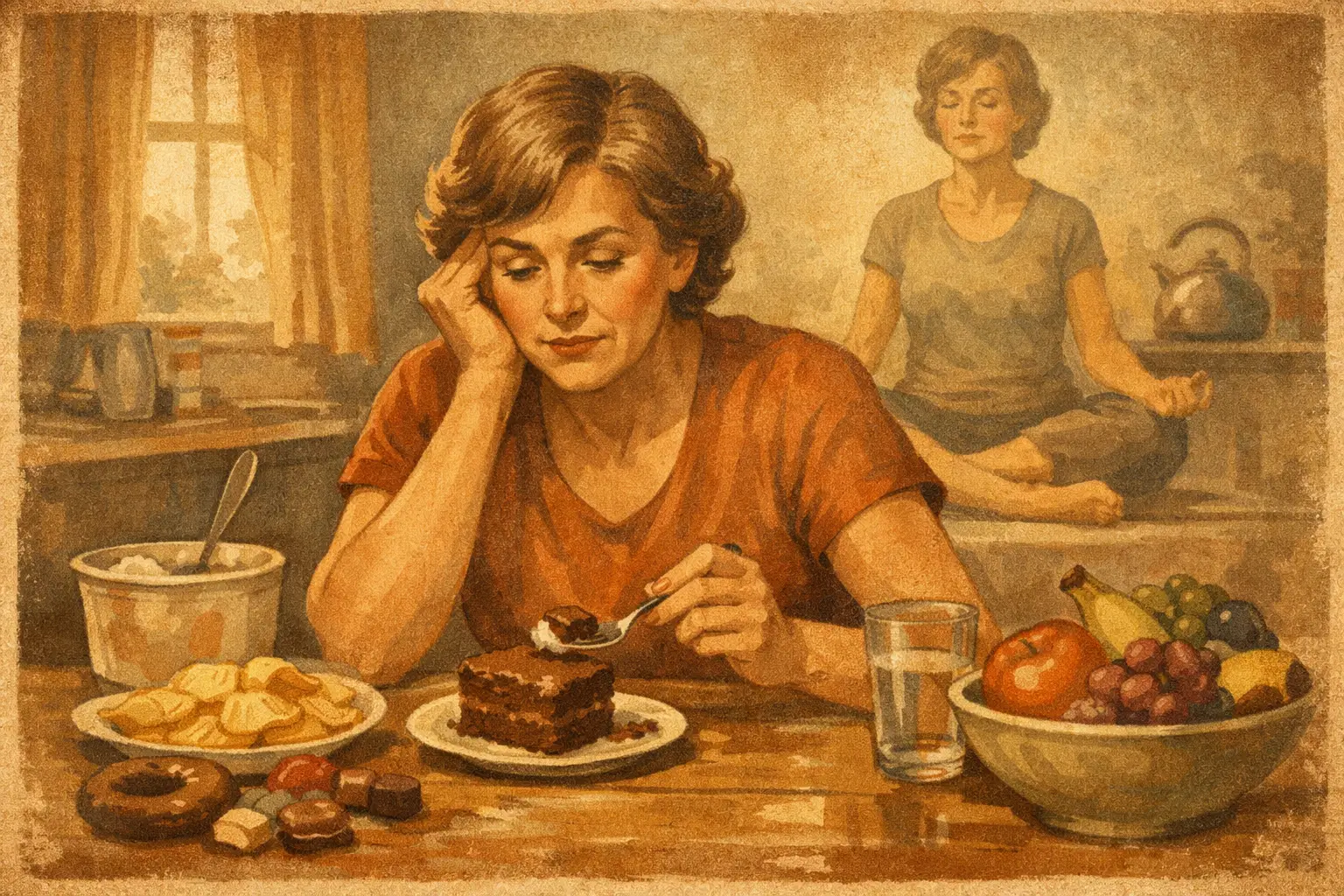
You make it through a long day, promise yourself you will eat “better” tomorrow, and then find yourself in the kitchen at 9 p.m. looking for something crunchy, sweet, or both. If that sounds familiar, emotional eating in menopause is probably not about a lack of discipline. It is often a signal from a body under hormonal stress, blood sugar swings, poor sleep, and a nervous system that is simply tired.
That matters, because midlife women are often told to treat every craving like a character flaw. Eat less. Try harder. Stop snacking. But when estrogen shifts, sleep gets lighter, cortisol runs high, and insulin becomes less forgiving, your appetite and your emotions stop playing by the old rules. You are not broken, and you are not imagining it.
Why emotional eating in menopause feels stronger
Menopause changes more than your cycle. It changes how stable you feel physically and emotionally from one part of the day to the next. Estrogen helps influence insulin sensitivity, appetite regulation, and even brain chemicals tied to mood. As estrogen declines, many women notice more irritability, more fatigue, and stronger food urges, especially later in the day.
Blood sugar becomes a bigger piece of the puzzle too. If breakfast is coffee and a granola bar, lunch is light, and dinner happens late, your body may spend the day riding one blood sugar drop after another. That can feel like craving sugar, needing comfort food, or suddenly losing control around snacks. In reality, your body may be asking for quick energy because it has not been supported well enough earlier.
Sleep loss makes this even harder. A poor night of sleep can raise hunger, increase stress hormones, and lower your patience for anything that feels restrictive. On those days, emotional eating is rarely just emotional. It is biochemical, practical, and predictable.
The difference between hunger and emotional eating
Real life is messy, so this is not always easy to sort out. Sometimes emotional eating in menopause starts with true physical hunger that got ignored too long. Other times it shows up as eating to take the edge off stress, loneliness, boredom, resentment, or exhaustion.
Physical hunger usually builds gradually and feels open-ended. A real meal sounds appealing. Emotional eating tends to feel urgent and specific. You do not want dinner. You want chocolate, chips, ice cream, or bread, and you want it now.
Still, there is overlap. If your body is underfed during the day, your evening eating may feel emotional when it actually started with a blood sugar crash. That is why white-knuckling your way through cravings usually backfires. Before you ask whether this is emotional, ask whether you are actually nourished.
What is driving it beneath the surface
For many women over 45, food becomes relief because so many parts of life require constant output. Work. Aging parents. Kids or grandkids. A household that still needs you even when you are drained. By the end of the day, eating can feel like the one dependable reward.
There is also the mental load of body frustration. When your usual strategies stop working and the scale climbs anyway, food can become both comfort and rebellion. You think, if nothing works, why not eat what I want? That response is understandable, but it often creates the very cycle that keeps weight stuck.
Hormones do not remove personal choice, but they do change the conditions under which those choices are made. That is a crucial difference. Shame makes the problem feel moral. A hormone-smart approach makes it solvable.
How to calm emotional eating in menopause without more dieting
The first goal is not perfect eating. It is creating enough stability in your day that your body stops chasing relief through food.
Start with your first meal. A breakfast built around protein, fiber, and healthy fat can steady blood sugar far better than toast alone or skipping breakfast altogether. Eggs with berries, Greek yogurt with chia and walnuts, or a smoothie with protein and flax can work well. The exact meal matters less than the principle: give your body something substantial before stress and hunger stack up.
Next, look at the long gap between meals. Many women who struggle most at night have simply gone too long without enough food during the day. If lunch is tiny and dinner is late, evening snacking is not a mystery. It is the setup. A balanced lunch with protein, vegetables, and a smart carb such as beans, quinoa, or sweet potato can help reduce the rebound.
Protein deserves extra attention in midlife. It helps with fullness, muscle maintenance, and blood sugar control, all of which matter more during menopause. If every meal is light on protein, cravings often stay louder than they need to.
Build a pause that does not feel punishing
You do not need to meditate for 20 minutes every time you want a cookie. But you do need a small space between the feeling and the food.
Try a two-minute check-in. Ask yourself, what do I actually need right now? Sometimes the answer is food. Sometimes it is rest, stimulation, comfort, or a break from decision-making. If you are physically hungry, eat a real snack instead of trying to be “good.” An apple with peanut butter, cottage cheese with fruit, or turkey and crackers will usually serve you better than circling the pantry for 30 minutes.
If the urge is emotional, the goal is not to ban food. The goal is to widen your response. Tea, a quick walk, a shower, a call to a friend, ten minutes with a book, or simply stepping out of the kitchen can change the intensity enough for you to choose on purpose.
Make your environment work for you
When you are tired and stressed, convenience wins. That is not a weakness. It is human behavior. So make the easier choice the more supportive one.
Keep satisfying basics available: pre-cooked protein, chopped vegetables, fruit, yogurt, nuts, hummus, boiled eggs, soup, and leftovers you actually like. If your only quick options are crackers and sweets, that is what will happen when your energy is low.
This is also where simple meals matter. Midlife nutrition does not need to become a second job. A plate of salmon, roasted vegetables, and rice is useful. So is a turkey roll-up with sliced cucumbers and a piece of fruit. The best plan is one you can repeat on a Wednesday when life is chaotic.
What to do after a rough night
One evening of overeating does not mean you need to start over on Monday, skip breakfast, or punish yourself at the gym. Those reactions usually keep the cycle going.
The better move is boring, and that is exactly why it works. Eat a balanced breakfast the next day. Hydrate. Get some protein early. Take a walk if you can. Return to normal structure. Your body responds better to consistency than to compensation.
If emotional eating happens often, look for patterns instead of blaming yourself. Is it worst after poor sleep? On days when you skip lunch? During high-stress weeks? Around wine at night? Patterns tell you where support is needed.
When emotional eating needs more support
Sometimes food is covering stress. Sometimes it is covering grief, anxiety, loneliness, or a level of burnout that no meal plan can fix. If emotional eating feels frequent, secretive, or impossible to interrupt, extra support can be a wise next step. That might mean talking with your doctor, a therapist, or a registered dietitian who understands midlife hormonal changes.
There is no prize for handling everything alone. The more your eating feels driven by overwhelm, the more helpful it can be to support both metabolism and emotional health at the same time.
If this has been your struggle, let this be the reframe: your job is not to become more strict. Your job is to become more supported. The women who do best in this season are not the ones with the most willpower. They are the ones who stop fighting their bodies and start feeding them in a way that creates steadier energy, calmer cravings, and a little more peace around food.
Helpful closing thought: the next time you feel pulled toward food, do not start with judgment. Start with curiosity. That shift alone can change more than another diet ever did.
This content is for informational purposes only and is not intended as medical advice
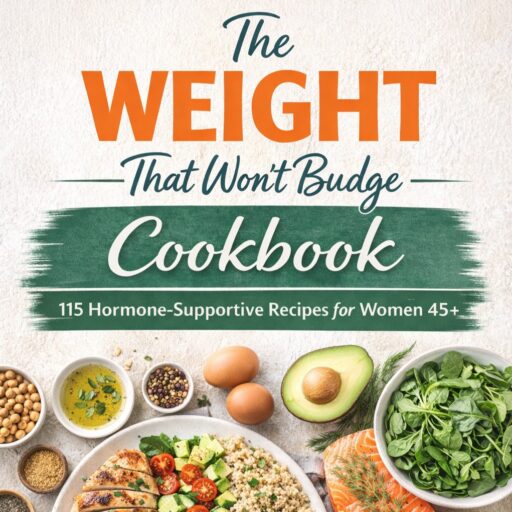
The Weight That Won’t Budge Cookbook