You can eat the same breakfast, walk the same neighborhood loop, and still watch your body respond differently than it did ten years ago. That is why metabolism slowdown after 40 feels so personal. It is not just about calories, and it is not a sign that you suddenly lost discipline. For many women, midlife weight changes are tied to a mix of muscle loss, shifting hormones, blood sugar changes, stress, sleep disruption, and a body that no longer responds well to the old diet rules.
What metabolism slowdown after 40 really means
When most people say their metabolism has slowed, they usually mean one of three things. They are burning fewer calories at rest, gaining weight more easily, or finding it harder to lose fat even when they are trying. All three can happen after 40, but not for the simplistic reason diet culture loves to repeat.
Your metabolism is not one single switch. It is the sum of many processes that keep you alive and functioning, including how your body uses energy at rest, digests food, stores fuel, and supports muscle. After 40, especially through perimenopause and menopause, several of those processes start shifting at the same time. That combination can make the body feel less predictable.
This is where many women get blamed unfairly. They are told to just eat less and move more, even though their sleep is worse, stress is higher, hormones are changing, and their body composition is shifting. That advice misses the real picture.
Why your body changes in midlife
One major piece is muscle. Starting in midlife, women naturally begin to lose lean muscle mass if they are not actively working to keep it. Muscle is metabolically active tissue, which means it helps support the number of calories your body uses each day. If muscle goes down, energy burn can go down too.
Then there is estrogen. As estrogen fluctuates and declines, many women notice weight gathering around the midsection, less stable energy, and stronger blood sugar swings. This does not mean estrogen is the only hormone involved, but it does play a role in how your body stores fat and responds to insulin.
Insulin matters here more than most women have been taught. When blood sugar rises sharply and often, insulin has to keep stepping in. Over time, the body may become less sensitive to insulin, making it easier to store fat and harder to access stored fat for energy. This is one reason why the same low-fat, high-carb diet that once worked in your 30s may leave you tired, hungry, and stuck in your late 40s or 50s.
Cortisol adds another layer. If you are under chronic stress, sleeping badly, or constantly under-eating, cortisol can stay elevated. That can increase cravings, disrupt blood sugar, and make belly weight more stubborn. Not every woman with high stress gains weight, and not every case of weight gain is cortisol-driven, but it is often part of the pattern.
Why eating less can backfire
A lot of women respond to midlife weight gain by tightening control. They skip breakfast, eat a light lunch, avoid carbs all day, and try to be extra “good.” Then they end up ravenous at night, snacking in the pantry, or feeling defeated because the scale still does not move.
This is not a character flaw. It is biology pushing back.
If you consistently under-eat, especially protein and overall nourishment, your body has fewer resources to maintain muscle, support thyroid function, and keep blood sugar steady. You may feel tired, cold, irritable, or snacky, and your workouts can start working against you instead of for you. A slower, stressed body is not the same thing as a supported one.
That does not mean calories never matter. They do. But for women over 45, the quality and timing of those calories often matter just as much. If your meals are built around toast, crackers, granola bars, and salad with almost no protein, your body may stay on a blood sugar roller coaster even when your intake looks “healthy” on paper.
What actually helps a slower metabolism after 40
The goal is not to force your body into submission. The goal is to give it the signals that help it feel safe enough to build or preserve muscle, stabilize blood sugar, and use energy more efficiently.
Prioritize protein at every meal
Protein is one of the most helpful tools for midlife metabolism. It supports muscle maintenance, keeps you fuller longer, and can help reduce the blood sugar spikes that lead to crashes and cravings later.
For many women, breakfast is the weakest meal of the day. Coffee and toast, cereal, or fruit alone may be quick, but they do not give your body much to work with. A better option could be eggs with sauteed vegetables, Greek yogurt with chia and berries, or a smoothie with protein, healthy fat, and fiber. It does not have to be fancy. It just needs to be balanced.
Build meals around blood sugar balance
This is where hormone-smart eating becomes practical. Instead of centering meals on starch and hoping for the best, think in terms of protein, fiber, healthy fat, and a smart portion of carbs.
A lunch of grilled chicken, roasted vegetables, and quinoa will land differently than crackers and hummus followed by a cookie in the break room. Both are food. Only one is likely to keep your energy steady for the next few hours.
Carbs are not the enemy, but carb type and context matter. Pairing them with protein and fat helps your body handle them better.
Strength train, even if fat loss is your main goal
If metabolism slowdown after 40 is partly about muscle loss, then protecting muscle has to be part of the solution. Strength training is not just for women trying to “tone up.” It helps support resting metabolism, blood sugar control, bone health, and daily function.
You do not need to live in the gym. Two to four sessions a week with dumbbells, resistance bands, machines, or bodyweight work can make a meaningful difference. Walking is still excellent for stress, circulation, and overall health, but it does not replace the need to challenge muscle.
Stop treating sleep like a bonus
Sleep problems become more common in midlife, especially with night sweats, anxiety, or waking at 3 a.m. That does not make sleep less important. It makes it more important.
Poor sleep can increase hunger hormones, worsen insulin resistance, and make cravings louder the next day. If you are sleeping five broken hours and wondering why your appetite feels out of control, your body is not being difficult. It is trying to compensate.
Even modest improvements help. A regular bedtime, less alcohol, a protein-forward dinner, managing caffeine earlier in the day, and getting morning light can all support better sleep rhythms.
Be careful with high-intensity exercise overload
Some women thrive with short, intense workouts. Others feel wrecked by them in midlife, especially when stress is already high and recovery is poor. More is not always better.
If you are doing hard cardio most days, eating lightly, and feeling puffy, exhausted, and hungry, your body may be asking for a different approach. Strength training, walking, mobility work, and a few well-placed higher-intensity sessions often work better than constant all-out effort.
What not to blame on age alone
It is easy to blame everything on getting older, but that can be too simple. Sometimes thyroid issues, sleep apnea, medications, depression, chronic dieting history, or insulin resistance are contributing to the picture. If your weight, fatigue, or other symptoms changed dramatically, it is worth looking deeper instead of assuming it is just midlife.
Age changes the body, yes. But symptoms still deserve attention.
A more realistic way to think about your metabolism now
Your body after 40 is not broken. It is more responsive to the basics, and less forgiving of the shortcuts. Crash diets, skipping meals, low-protein eating, stress overload, and poor sleep can all show up faster now. That is frustrating, but it is also useful information.
When you shift your focus from eating less to eating in a way that supports hormones, muscle, and blood sugar, things often start to feel less confusing. The scale may not respond overnight. Energy, appetite, cravings, and waistline changes often improve first. That still counts as progress.
If your old plan stopped working, that does not mean you failed. It means your body is asking for a smarter plan. And for women in midlife, smarter usually looks simpler, more balanced, and far more supportive than anything diet culture sold you.
A good next step is to look at one meal today and make it more stabilizing – more protein, more fiber, and less guesswork. Small changes done consistently tend to work better than dramatic resets your body cannot sustain.
This content is for informational purposes only and is not intended as medical advice
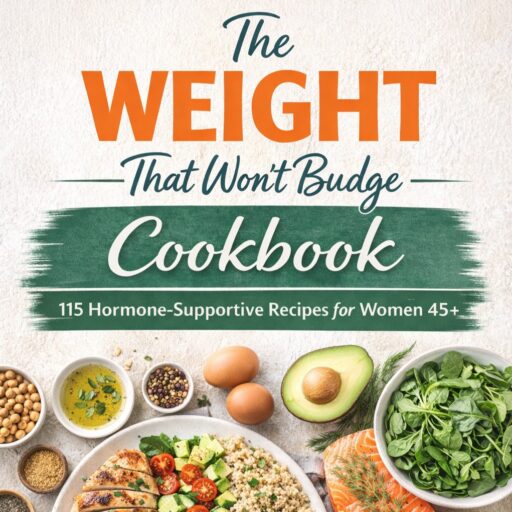
The Weight That Won’t Budge Cookbook