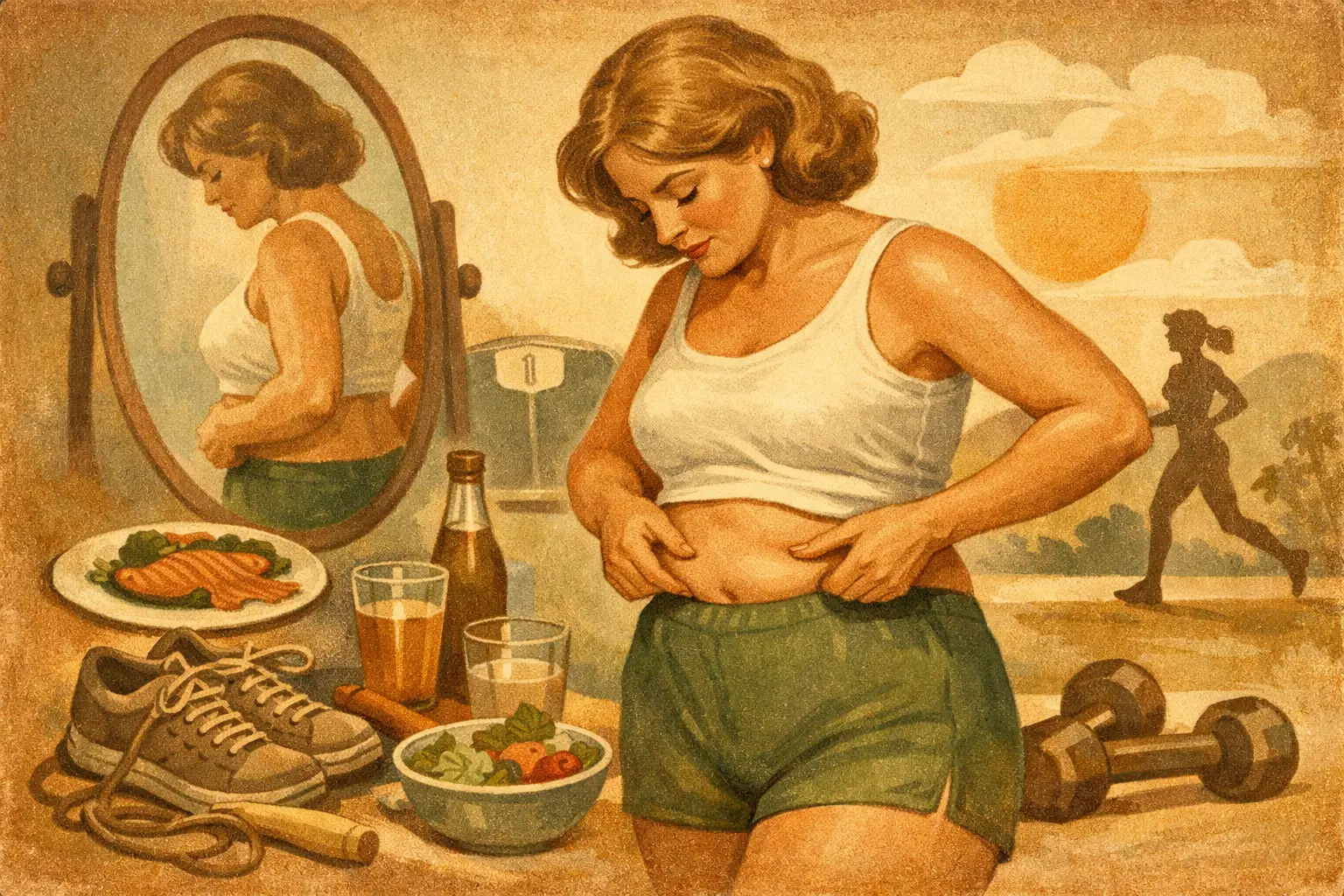
You can eat less, move more, skip dessert, and still watch your middle get softer and thicker in midlife. That is exactly why so many women start searching for how to lose menopause belly. Not because they are doing everything wrong, but because the old rules stop working when hormones, insulin, sleep, and stress all start shifting at once.
Menopause belly is not just about appearance. For many women, it comes with bloating, rising blood sugar, lower energy, and the frustrating sense that your body no longer responds the way it used to. You are not broken. But you do need a different strategy than the one diet culture sold you.
Why menopause belly happens
As estrogen declines, your body becomes more likely to store fat around the abdomen instead of the hips and thighs. At the same time, many women become more insulin resistant in midlife, which means blood sugar rises more easily and fat storage becomes easier too.
Then there is the rest of real life. Sleep often gets worse. Stress runs high. Muscle mass naturally declines with age if you are not actively working to keep it. All of that adds up to a slower metabolism, stronger cravings, and a body that feels less forgiving than it did at 30.
That is why simply cutting calories usually backfires. Eating too little can leave you tired, hungry, and more likely to lose muscle, which only makes the problem harder to solve.
How to lose menopause belly without extreme dieting
The goal is not to punish your body into shrinking. The goal is to create conditions where your hormones, blood sugar, and metabolism can work with you again.
That starts with food.
Build meals around protein first
One of the most effective shifts for menopause belly is eating enough protein consistently. Protein helps steady blood sugar, supports muscle maintenance, and keeps you full longer. That matters because random snacking, carb-heavy breakfasts, and light lunches often set off the blood sugar swings that drive belly fat storage and cravings later in the day.
A practical target is to include a solid protein source at every meal. Eggs, Greek yogurt, cottage cheese, chicken, turkey, salmon, tuna, tofu, and lean beef all work. If breakfast has been toast, fruit, or cereal, this is often the first place to make a change.
A better breakfast could be eggs with sauteed vegetables, Greek yogurt with chia seeds and berries, or a simple protein smoothie that does not come loaded with sugar.
Stop fearing carbs and start balancing them
Many women go low calorie, then low fat, then low carb, and end up confused and exhausted. The better approach is balanced carbs, not reckless carbs and not carb panic.
You do not need to eliminate every carbohydrate to lose menopause belly. But you do want to be more selective. Focus on carbs that come with fiber and nutrients, such as beans, berries, apples, oats, quinoa, sweet potatoes, and nonstarchy vegetables. Pair them with protein and healthy fat so they digest more slowly.
For example, a plain bagel for breakfast will hit differently than eggs with half a sweet potato. A bowl of pasta by itself will affect blood sugar differently than grilled chicken, roasted vegetables, and a smaller portion of pasta.
That is the kind of shift that supports fat loss without making your life miserable.
Eat enough fiber to help insulin and appetite
Fiber is one of the quiet heroes in midlife weight loss. It helps with fullness, digestion, cholesterol, and blood sugar control. Yet many women do not get enough, especially if they are relying on packaged snack foods or skipping meals.
Aim to include vegetables at lunch and dinner, add seeds or berries to breakfast, and use beans or lentils a few times a week if they work well for your digestion. Fiber will not erase belly fat overnight, but it does make your whole metabolism easier to manage.
Strength training matters more than extra cardio
If you are trying to figure out how to lose menopause belly, this is where many women need the biggest mindset shift. Endless cardio is not the answer.
Walking is excellent for health, stress reduction, and daily movement. Keep it. But if all your exercise is walking or cardio classes, you may be missing the thing that best protects your metabolism in midlife, which is muscle.
Strength training helps preserve and build lean mass. That improves insulin sensitivity and gives your body more metabolic support. You do not need to become a bodybuilder. Two to four sessions a week using dumbbells, resistance bands, machines, or body weight can make a real difference.
The key is progression. If the workout never gets more challenging, your body has no reason to adapt. Start where you are, but work toward stronger legs, back, chest, and core over time.
Sleep and stress are not side issues
This part gets dismissed too often, especially by women who are already doing their best. But poor sleep and chronic stress can absolutely make menopause belly harder to lose.
When sleep drops, hunger hormones get disrupted. Cravings rise. Blood sugar control worsens. Cortisol, your main stress hormone, can stay elevated too often, which is linked to more belly fat storage in some women.
That does not mean stress is your fault or that you need a perfect evening routine. It means support matters. If your sleep has fallen apart in midlife, address it like the health issue it is.
Start with the basics you can control. Eat enough during the day so you are not waking up hungry at 2 a.m. Cut back on late-night sugar and alcohol if they disrupt your sleep. Get morning daylight. Keep caffeine earlier. Create a wind-down routine that actually feels realistic, even if it is just ten minutes of reading, stretching, or quiet.
What to avoid if you want to lose menopause belly
A lot of common advice sounds healthy but works against women in this stage of life.
Very low-calorie diets can increase fatigue and make muscle loss more likely. Juice cleanses and detox plans often leave blood sugar unstable and protein intake too low. Hours of cardio can drive up hunger without doing much to reshape your metabolism. Skipping meals may seem like control, but for some women it leads to overeating later and worse glucose swings.
Intermittent fasting can help some women, but it depends. If fasting helps you simplify eating and feel better, it may be useful. If it leaves you shaky, irritable, obsessed with food, or overeating at night, it is not the magic fix people make it out to be.
This is where hormone-smart weight loss is different from rigid dieting. It pays attention to how your body responds.
A realistic day of eating for menopause belly loss
This does not need to be fancy. It needs to be steady.
Breakfast could be scrambled eggs with spinach and a side of berries. Lunch might be grilled chicken over a big salad with avocado and chickpeas. Dinner could be salmon, roasted broccoli, and a small sweet potato. If you need a snack, think protein first, like cottage cheese, a boiled egg, turkey roll-ups, or Greek yogurt.
Simple meals work. In fact, they often work better because they are easier to repeat.
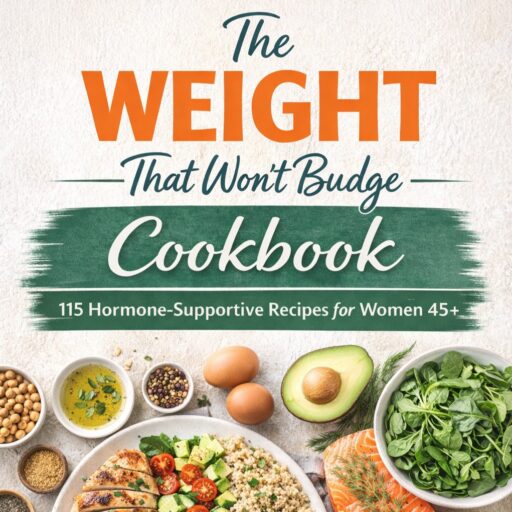
If you want more support with realistic meal ideas, The Weight That Won’t Budge focuses on exactly this kind of practical, hormone-smart eating that fits real life after 45.
How to lose menopause belly and stay consistent
Consistency in midlife does not come from more discipline. It comes from making your plan doable enough to repeat.
Pick a few anchors. Protein at every meal. Strength training a few times a week. Daily walking. Better sleep support. Fewer liquid calories and less mindless snacking. Those habits may sound basic, but together they change the entire environment that drives menopause belly.
And give it time. Midlife fat loss is often slower than it used to be. That does not mean nothing is happening. Better energy, less bloating, improved cravings, stronger workouts, and steadier appetite are all signs your body is responding before your waistband fully catches up.
You do not need to starve, overexercise, or blame yourself into progress. You need a plan that respects what your body is dealing with now and supports it accordingly. Start there, and let your next step be one you can still do next week.
This content is for informational purposes only and is not intended as medical advice
The Weight That Won’t Budge Cookbook