
Hard workouts aren’t the only way to improve fitness, support cardiovascular health, or pursue broader health benefits after 50. Progressing to high intensity too quickly, or using it too often, can increase injury risk and leave you sore, hungry, or tired without enough recovery time.
Zone 2 cardio is a steady, moderate level of exercise that builds endurance without draining your energy. It is simple, low-impact, and a good fit for women who want to move more without living at the gym.
The goal is a repeatable workout routine, not exhaustion, that supports fitness goals like stamina, mobility, or weight management.
Key Takeaways
- Zone 2 cardio is a steady, moderate aerobic effort that supports endurance and cardiovascular fitness without requiring exhausting workouts.
- Use the talk test as your main guide: you should be able to speak in complete sentences, but singing should feel difficult.
- Walking, cycling, swimming, water exercise, and low-impact machines can all provide effective Zone 2 workouts; choose an option you can do consistently and comfortably.
- Start conservatively and increase session time before speed, incline, or resistance. Build gradually toward 150 minutes of moderate activity each week if it suits your health and fitness level.
- Heart rate numbers are estimates and can be affected by medications, stress, heat, sleep, and menopause-related symptoms. Slow down for discomfort or unusual symptoms, and seek professional guidance when needed.
Zone 2 Cardio for Women Over 50: What It Means
Zone 2 is an easy-to-moderate aerobic effort within broader training zones. Your heart rate is elevated, but you shouldn’t be gasping for air or pushing through pain.
How it feels can vary with fitness, menopause-related sleep disruption, joint symptoms, heat, and stress. For many women, it falls around 60% to 70% of estimated maximum heart rate, but that broad estimate isn’t medically precise.
It should feel steady, not easy to ignore
Zone 2 shouldn’t feel like a slow stroll through the grocery store. You should notice your breathing and feel your body working.
Everyday physical activity can be useful, but this should be a deliberately sustained effort. You should be able to continue for 20, 30, or 45 minutes at a comfortable pace.
This effort is often called moderate intensity. The Mayo Clinic’s guide to exercise intensity describes moderate activity as a broad range rather than a fixed target.
Why this approach works well after 50
Many women over 50 are already managing sleep changes, joint stiffness, menopause symptoms, work stress, or a body that feels less forgiving than it once did. Long, punishing workouts can feel like another demand.
Zone 2 gives you a practical form of aerobic exercise. It can support cardiovascular fitness while keeping recovery manageable. You can walk, cycle, swim, or use a treadmill without needing an advanced fitness plan.
Find Your Zone 2 Heart Rate Range
For zone 2 cardio, numbers are estimates, not rules. Fitness level, medications, sleep, stress, temperature, hydration, and menopause-related symptoms can all change how the same workout feels.
Start with a simple range, then use your breathing and energy level to fine-tune your effort.
Use a rough age-based estimate
A common starting formula is:
220 minus your age = estimated maximum heart rate
For a 60-year-old woman, the estimated maximum heart rate is 160 beats per minute. A Zone 2 range of 60% to 70% would be about 96 to 112 beats per minute, but that range isn’t a universal prescription.
Your resting heart rate can provide personal context, but it isn’t a substitute for professional guidance or a validated exercise assessment. The American Heart Association target heart rate chart also shows that moderate exercise can span a broad percentage range.
Tracking your resting heart rate can help you understand your baseline, but it can’t set a safe target on its own. If you take beta-blockers or other pulse-affecting medications, rely more on perceived effort and ask a clinician about appropriate targets.
A fitness watch can help, but you do not need one. A timer and an occasional pulse check work fine.
Let the talk test guide you
The talk test is a practical guide to moderate effort, not a diagnostic test. During your workout, speak a complete sentence out loud.
If you can speak in complete sentences, but singing would be difficult, you are likely near the right effort. If only a few words are possible, slow down. Increase your pace slightly only if singing feels effortless.
The CDC’s guide to measuring physical activity intensity uses a simple rule for exercise intensity: moderate exercise allows you to talk, but not sing.
A number is helpful. Your breathing, comfort, and ability to recover matter just as much.
What Zone 2 Can Do for Fitness and Weight Loss
Zone 2 cardio is not a shortcut. It can build an aerobic base, your ability to sustain movement while using oxygen. This supports daily energy, walking stamina, recovery, and lasting exercise habits.
For women who want to lose weight, it can be easier to maintain than repeated hard workouts. It may also support other fitness goals.
Your body uses fat and carbohydrates
Your body uses both fat and carbohydrates for fuel during exercise. At easier efforts, it usually relies on a greater proportion of fat than during hard intervals or sprints.
Fat burning is a term often used in exercise marketing. Fat oxidation may account for a larger share of fuel during easier exercise. However, carbohydrates and fat are usable fuels, and fat isn’t a guaranteed energy source for body-fat loss.
Body-weight change still depends on overall energy intake, sleep, activity level, resistance work, stress, and consistency.
Still, Zone 2 may support weight loss by adding movement without intense hunger, soreness, or fatigue. Those effects sometimes follow hard exercise. For overweight women, walking and cycling also offer a more joint-friendly way to increase weekly activity.
Steady aerobic work may contribute to adaptations in oxygen use, mitochondrial function, and cellular energy production. It may help fatigue-resistant muscle fibers, including slow twitch fibers, sustain movement. Over time, those muscle fibers may use oxygen more efficiently. Training may support lactate clearance and improve the capacity of additional muscle fibers, including slow twitch fibers. These are possible adaptations, not guaranteed results from one session or treatments for a condition.
It builds an aerobic base
Consistent work can strengthen this aerobic base, making daily activity feel easier. You may notice that stairs, errands, travel, and longer walks leave you less winded.
Endurance training often includes plenty of steady work because it can be repeated without excessive fatigue. You don’t need to train like an athlete, but the principle still applies.
Interval training and high intensity sessions can be useful, but they usually demand more recovery. Steady work done consistently is more useful than a hard workout followed by four days on the couch.
The Best Zone 2 Workouts for Midlife
The best exercise is the one you can do regularly without dread or pain. You do not need to run to get the benefits of zone 2 cardio.
Choose a movement that lets you adjust pace or resistance when your heart rate or effort rises too far.
Brisk walking is a strong place to start
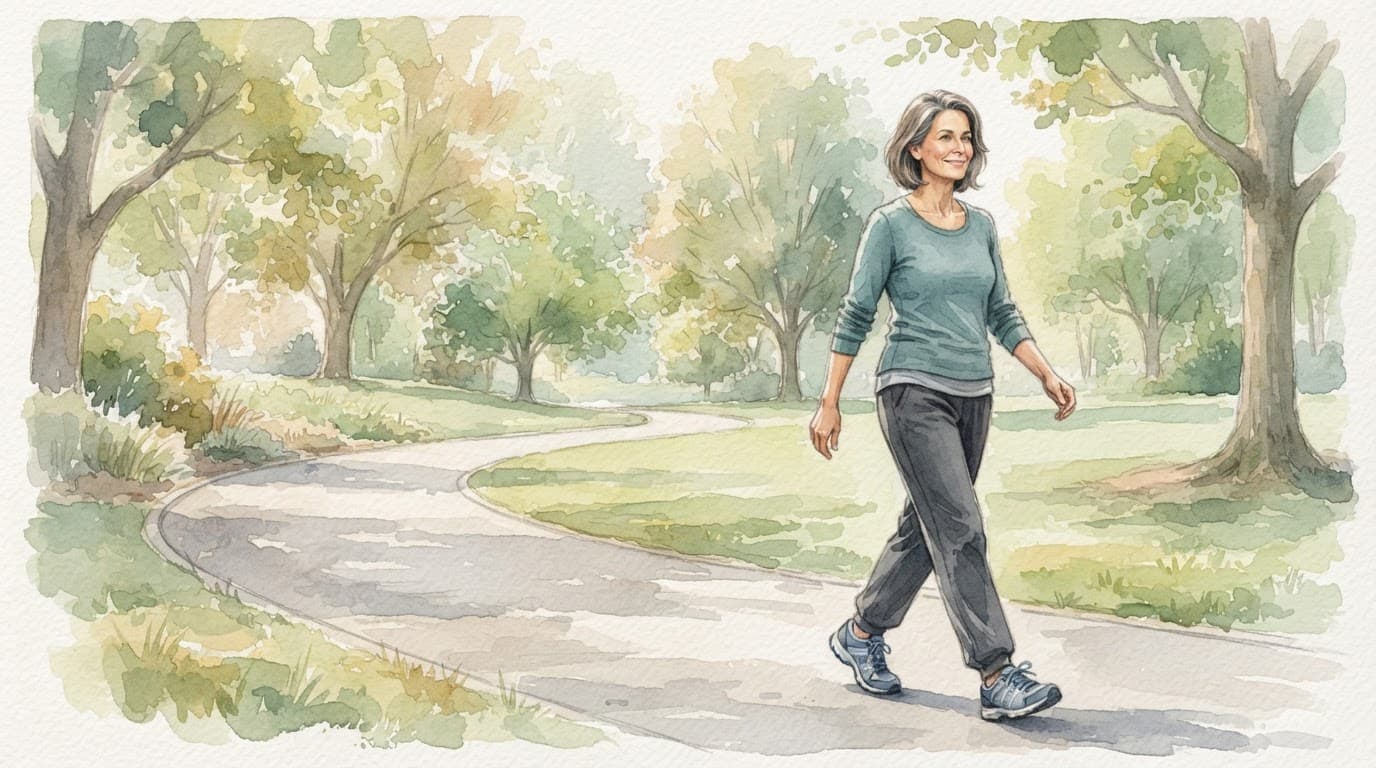
Walking outdoors, on a treadmill, or on a gentle incline is a simple form of aerobic exercise. Begin at a purposeful pace, then adjust your speed before adding steep hills.
If your knees, hips, or back hurt, shorten your stride and choose flatter terrain. For balance concerns, use a handrail or other stable hand support. A recumbent or stationary bike, or water exercise, may suit pelvic-floor concerns better.
Seek professional instruction when needed. Stop or change the movement if pain worsens, feels sharp, or persists. Supportive shoes matter more than fancy workout gear.
Brisk walking is recognized as moderate activity. The American Heart Association’s adult activity recommendations suggest at least 150 minutes of moderate physical activity each week.
Cycling, swimming, and machines give you more control
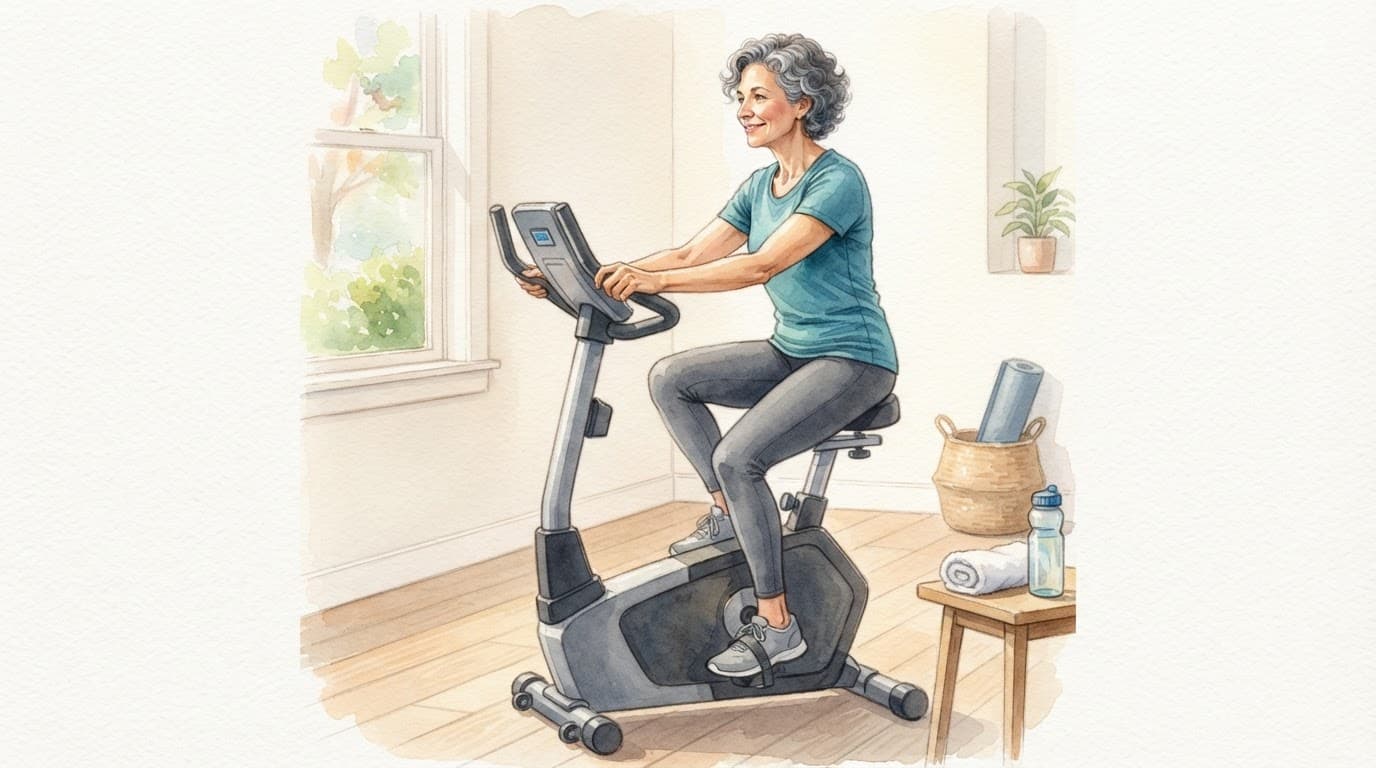
A stationary bike is useful when walking causes joint discomfort. You can control resistance and cadence without managing uneven pavement or hills.
Other good options include water walking, swimming laps at a relaxed pace, an elliptical machine, and controlled low-impact dance. Each can provide aerobic work when you can adjust the pace or resistance.
Keep the effort controlled. If that number or your perceived effort rises too far, reduce the resistance or slow your pace. Variety can make this menu easier to follow, helping you stay consistent and enjoy the health benefits.
You can also pair this cardio with strength training on separate or alternating days. Cardio supports fitness, but it does not replace resistance work.
A Four-Week Zone 2 Cardio Plan
Start below the amount you think you should do. This conservative approach lowers injury risk and gives your feet, joints, and muscles enough recovery time to adapt.
Use walking, cycling, or another low-impact form of aerobic exercise. Begin and end each session with a few easy minutes. Use the talk test as your main guide, speaking in full sentences. Check your heart rate occasionally, but let comfort guide you.
| Week | Sessions | Time per session | Focus |
|---|---|---|---|
| 1 | 3 | 20 minutes | Find a pace where you can speak comfortably |
| 2 | 3 | 25 minutes | Keep the effort steady |
| 3 | 4 | 25 to 30 minutes | Add one extra easy session |
| 4 | 4 | 30 to 35 minutes | Build toward 120 minutes total |
Build time before speed
Gradual increases give the muscle fibers used for sustained movement time to adapt. Many are slow twitch muscle fibers, but you don’t need to understand fiber physiology to exercise safely. Regular aerobic work may also support lactate clearance, but it isn’t a performance target.
Increase session duration before pace, incline, or resistance. Change only one variable at a time. If soreness, fatigue, joint symptoms, or other problems persist, reduce the plan.
Leave a rest day or easier day between harder sessions when needed. You can stay on one week longer or split sessions into shorter blocks. With consistency, these sessions can become a repeatable workout routine.
Once you can complete four comfortable 30-minute sessions, work toward 150 minutes of physical activity weekly. This is a general public-health goal, not a requirement. You can split these minutes into shorter sessions, and a 15-minute walk after lunch still counts.
Use this table as a starting framework, not a prescription, and adjust it to your fitness goals. If you have a significant medical condition or have been inactive for a long period, consult a healthcare professional before starting.
Strength training twice a week complements cardio rather than replacing it. Muscle supports balance, mobility, blood sugar management, and daily function. Keep it simple with bodyweight movements, resistance bands, dumbbells, or a beginner strength routine.
When Your Heart Rate Spikes Too Fast
A quick heart rate rise doesn’t mean you’ve failed at Zone 2. It often means the pace, heat, incline, stress level, or starting point needs adjusting.
Slow down early rather than trying to force the number.
Watch for cardiac drift on longer sessions
Your pulse may slowly rise during a workout even when your pace stays the same. This is often called cardiac drift. Heat, dehydration, fatigue, poor sleep, hills, or an overly ambitious pace can all contribute.
If your heart rate climbs above your comfortable range after 20 minutes, slow down a little. Choose a cooler time, hydrate appropriately, use a flatter route, and allow more recovery time instead of forcing the target.
A few beats higher is often normal, but it isn’t a reliable measure of lactate clearance, so don’t chase the number. Mild exertional discomfort can be normal. Stop exercising and get urgent medical help for chest pressure, faintness, new severe shortness of breath, or marked dizziness.
Medication can change the numbers
Beta-blockers and some other medicines can blunt or alter your pulse response. Percentage targets based on maximum heart rate can therefore mislead. Illness, stress, medication, and recovery status can also affect your resting heart rate.
Use the talk test and how you feel; perceived exercise intensity may be more useful than a device reading. Don’t change medicines based on a watch reading.
Speak with a healthcare professional before starting or increasing exercise if you have heart disease, uncontrolled blood pressure, or diabetes complications. Get advice first if you have unexplained symptoms or a long period without activity.
Pair Cardio With Meals That Support Your Goals
Zone 2 cardio works best as part of a steady routine, not as punishment for eating. You do not need to earn meals with exercise.
Women over 45 often do well with regular meals that include protein-rich foods, fiber, and satisfying fats. These choices can support steadier energy and make it easier to avoid skipping meals, craving sugar, and overeating later. Individual nutrition needs vary, so adjust portions and meal timing to suit you.
Keep food practical and filling
If a morning walk leaves you hungry, have a balanced breakfast afterward. Eggs with vegetables, Greek yogurt with berries, or leftovers with protein can support a routine that includes cardio and strength training.
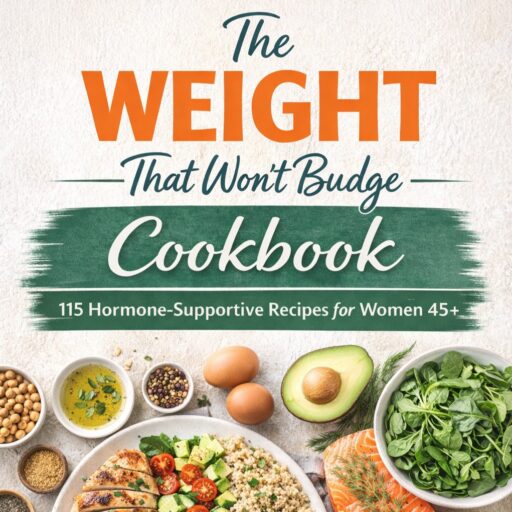
The recipes in The Weight That Won’t Budge offer examples of simple meals for women over 45. They can help you plan satisfying breakfasts, slow-cooker dinners, and realistic meals that fit a regular walking routine.
Zone 2 will not replace nutrition, and nutrition does not replace movement. Both can support steady progress without making exercise compensation for eating or turning your life into a strict plan.
Frequently Asked Questions
How often should women over 50 do Zone 2 cardio?
Start with three sessions per week of about 20 minutes, then gradually add time or an extra easy session. You can work toward 150 minutes of moderate activity weekly, but this is a general goal rather than a requirement.
Do I need a fitness watch to track Zone 2?
No, you can use a timer and the talk test without any special equipment. A fitness watch may provide helpful estimates, but breathing, comfort, and recovery are more important than hitting a precise number.
What is the best Zone 2 exercise for beginners?
Brisk walking is a simple place to start, but cycling, swimming, water walking, and low-impact machines can work well too. Choose an activity that lets you adjust the pace or resistance and does not worsen joint or other symptoms.
Can Zone 2 cardio help with weight loss?
It can add manageable movement to your routine and may be easier to maintain than repeated hard workouts. Weight change also depends on overall food intake, sleep, stress, strength training, activity level, and consistency.
When should I speak with a healthcare professional before exercising?
Ask for guidance before starting or increasing exercise if you have heart disease, uncontrolled blood pressure, diabetes complications, unexplained symptoms, or have been inactive for a long period. Stop and seek urgent medical help for chest pressure, faintness, new severe shortness of breath, or marked dizziness.
Final Thoughts
Zone 2 cardio is a practical form of endurance training that can build cardiovascular fitness and support cardiovascular health. Its health benefits may include better stamina and easier daily movement, especially when paired with strength training.
Start with a manageable session and use the talk test to guide your pace. Remember that heart rate numbers are estimates, and resting heart rate can vary. Progress gradually, and consult a healthcare professional if symptoms, medications, or medical conditions call for individualized advice.