
If your usual fat loss plan stopped working in your 40s or 50s, it is not a personal failure. Midlife weight changes are common, and weight gain can happen even when your habits seem unchanged.
Hormonal changes can shift fat toward the abdomen, disrupt sleep, affect hunger, and interact with stress, body composition, and cortisol levels. The answer is not eating less and exercising harder, but building habits that support steadier blood sugar, protect lean muscle mass, and make fat loss more sustainable.
Small, repeatable changes usually work better than another strict plan.
Key Takeaways
- Menopause can shift fat toward the abdomen, but weight gain usually reflects several factors, including aging, muscle loss, lower activity, poor sleep, stress, and changing hormones.
- Cortisol does not automatically cause belly fat, and routine cortisol testing is not needed for most menopause-related weight changes.
- Sustainable fat loss is better supported by regular meals with enough protein and fiber, strength training, manageable daily movement, sleep, and recovery.
- Track waist measurements, strength, sleep, and consistency instead of judging progress by daily scale changes alone.
- Talk with a clinician about rapid or unexplained weight gain, severe fatigue, sleep apnea symptoms, or signs of conditions such as thyroid disease or Cushing’s syndrome.
Why menopause can change where weight is stored
Midlife weight changes rarely come from one hormone or one food. Gradual weight gain and stalled fat loss during perimenopause and postmenopause reflect several factors. They include aging, less daily movement, poor sleep, muscle loss, genetics, medication, and stress.
Still, shifts in estrogen levels and progesterone can affect fat distribution, but neither hormone alone determines body weight. Many women notice that weight once stored around the hips and thighs now collects around the waist. This deeper abdominal fat is called visceral fat. It sits around internal organs and is more closely linked with insulin resistance and cardiovascular disease than fat stored under the skin.
A Harvard overview of perimenopause and weight changes makes an important point: hormonal changes affect where fat is stored, while lower physical activity remains a strong predictor of overall weight gain. Both parts matter.

Estrogen, muscle, and metabolism all change together
Estrogen supports many systems involved in body composition. As estrogen levels decline, the body may store more fat in the midsection. At the same time, lean muscle mass tends to decline with age unless you actively train it.
Muscle uses more energy than fat tissue. Less muscle can lower your metabolic rate and daily energy needs, even when your meals haven’t changed much. That is why a plan that worked at 35 may lead to weight gain at 52 and make fat loss slower.
Research on the menopausal transition also shows that body composition can matter more than the number on the scale when assessing fat loss. A review of weight management in perimenopausal women describes the combined effects of changing hormones, lower activity, sleep issues, and lifestyle habits.
Where cortisol fits into abdominal fat
Cortisol is the stress hormone made by the adrenal glands. You need it. It helps regulate blood pressure, blood sugar, inflammation, alertness, and the normal wake-sleep rhythm.
The issue is not one stressful afternoon or a hard workout. The issue is a body that rarely gets a recovery signal. Poor sleep, hot flashes, under-eating, emotional stress, frequent alcohol use, and nonstop intense exercise can disrupt cortisol levels and throw daily patterns out of balance.
Cortisol does not automatically create belly fat. Yet menopause research suggests that local cortisol activity inside visceral fat may increase after menopause. That local activity doesn’t necessarily mean circulating cortisol levels are always elevated. In simple terms, fat in the midsection may become more responsive to cortisol during this stage of life.
A stubborn waistline is rarely fixed by punishing your body. It responds better to steady meals, muscle-building work, sleep, and recovery.
Menopause cortisol weight: what helps most
The best fat loss plan is not extreme. It supports steadier blood sugar, provides enough protein and fiber, and leaves room for recovery. That matters when weight gain is shaped by stress, sleep, and changing routines. Regular meals and recovery may also support steadier cortisol levels.
For women over 45, this approach can make sustainable fat loss more manageable. It is often better than cutting calories until energy, mood, and sleep fall apart.
Eat enough at regular meals
Skipping meals can work for some people, but it can also lead to late-day hunger, cravings, and overeating. If fasting leaves you wired, tired, or thinking about food all evening, it may not be the right tool right now.
Start with a simple plate:
- Include protein at breakfast, lunch, and dinner, such as eggs, Greek yogurt, chicken, tofu, fish, beans, or cottage cheese.
- Add high-fiber carbohydrates such as oats, lentils, berries, apples, beans, or sweet potatoes.
- Include healthy fats from olive oil, avocado, nuts, seeds, salmon, or sardines.
- Build meals around whole foods and vegetables, especially when lunch or dinner usually leaves you sleepy or hungry again soon.
Soluble fiber slows digestion and can help keep blood sugar more stable after meals. Omega-3 fatty acids from fish, walnuts, chia, and flax fit an anti-inflammatory diet built around vegetables, legumes, nuts, seeds, and minimally processed foods. These choices do not erase stress, but balanced meals can make fat loss more manageable by reducing sharp hunger swings.

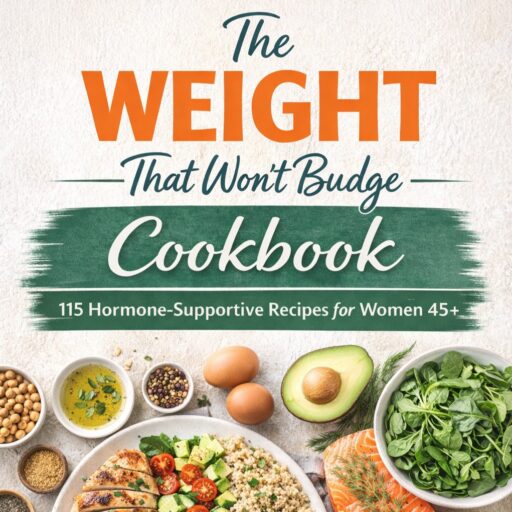
The recipes in The Weight That Won’t Budge are built around this practical approach. They give women simple, hormone-smart meals that support protein, fiber, blood sugar balance, and real-life routines without turning food into another full-time job.
Calorie awareness can still be useful when gradual weight gain is the concern. A sustainable calorie deficit can support fat loss, but standard weight-loss diets often fail when they are too low in protein, too restrictive, or impossible to maintain during poor sleep. A 2025 review of intermittent fasting at menopause found that the best approach is still under study. The method needs to fit your health, hunger, and lifestyle.
Choose strength training over endless cardio
Long cardio sessions and interval workouts are not bad. They can improve fitness and support heart health. The problem starts when they become another stressor in a life already short on sleep and recovery, especially when hot flashes interrupt rest.
If you finish every workout exhausted, sore for days, and hungrier than usual, reduce the intensity before you quit moving altogether. Physical activity should build you up, not leave you flattened. Recovery deserves attention when stress and poor sleep may already affect cortisol levels.
A cortisol-friendly weekly plan can look like this:
- Strength train two or three times each week. Focus on squats or chair stands, rows, presses, hinges, carries, and core work.
- Walk most days, even if it is only 10 to 20 minutes after meals. Short walks can support blood sugar and add manageable daily movement.
- Keep high-intensity interval training to one or two sessions weekly if you enjoy it and recover well.
- Take at least one easier day each week. Gentle stretching, walking, or rest all count.
This resistance work is especially useful because it helps protect lean muscle mass during weight loss. More muscle also improves how the body handles glucose. For women trying to lose weight, this can make fat loss feel steadier without chasing harder workouts every week.
Protect sleep like a health habit
Hot flashes, night sweats, and sleep disturbances can raise appetite and lower the energy available for meal planning or exercise. A rough night also makes sweet, salty, fast food more tempting the next day. That is biology, not poor discipline.
Use good sleep hygiene: keep the bedroom cool and dark, move caffeine earlier, and limit alcohol if it triggers night waking. Try a regular wind-down routine, even if it is only ten minutes of reading, stretching, or slow breathing.
If snoring, gasping, morning headaches, or severe daytime fatigue are part of the picture, ask about sleep apnea. It is common and often missed in midlife women.
A simple way to troubleshoot stalled fat loss
When fat loss stalls or weight gain is a concern, changing everything at once makes it hard to know what helped. Pick one or two changes, including one adjustment to physical activity, and keep them for two weeks before adding more.
| What you notice | A useful first adjustment |
|---|---|
| You are hungry by mid-afternoon | Add protein and fiber to breakfast and lunch. |
| You wake at night and crave sugar | Review alcohol, late caffeine, dinner balance, and hot flashes. |
| Workouts leave you drained | Replace one hard session with strength training or a walk. |
| The scale will not move | Track waist measurements, strength, sleep, and consistency for four weeks before judging fat loss. |
| You eat well all day, then overeat at night | Eat a more complete lunch and planned afternoon snack. |
Do not judge progress by daily scale changes or assume a short-term increase is true weight gain. Water retention, constipation, salty meals, poor sleep, stress, and hormonal fluctuations can all move the number. Nighttime waking and sleep disturbances can make progress harder, while poor sleep and stress can affect cortisol levels without requiring daily testing. Measure your waist monthly for changes in abdominal fat, notice how clothes fit, and track whether you are getting stronger.
Emotional eating in menopause is also common. Stress can make food feel like quick relief. A planned snack, a protein-rich dinner, and a pause before eating can support fat loss more effectively than shame ever will.
When to talk with your clinician
Cortisol testing is not a routine test for menopause-related fat loss. A single measurement of cortisol levels cannot explain every weight change. Testing makes sense when a clinician suspects a specific condition, such as Cushing’s syndrome, based on symptoms and medical history.
Ask for a full review if weight gain is rapid or unexplained, especially with easy bruising, new muscle weakness, high blood pressure, uncontrolled blood sugar, or major fatigue. Thyroid disease, sleep apnea, depression, medications, sleep disturbances, and insulin resistance can also contribute to weight gain.
Hormone replacement therapy may help symptoms such as hot flashes and sleep disruption. It isn’t a fat loss treatment, but symptom relief can make healthy routines easier. Some women may also qualify for prescription weight-management medication, including GLP-1 receptor agonists, to support fat loss. These decisions should include a conversation about medical history, side effects, cost, and long-term support.
Frequently Asked Questions
Does menopause cause cortisol belly fat?
Menopause can change where the body stores fat, making abdominal and visceral fat more common. Cortisol may influence this process, but it is only one part of a larger picture that includes sleep, stress, muscle loss, activity, and changing hormones.
What is the best way to lose weight during menopause?
Focus on regular meals with protein, fiber, healthy fats, and minimally processed foods. Combine strength training with walking, protect your sleep, and choose a calorie deficit that does not leave you exhausted or constantly hungry.
Should I get my cortisol levels tested for menopause weight gain?
Routine cortisol testing is not usually helpful for menopause-related weight changes because a single result cannot explain everyday fluctuations. Testing may be appropriate when a clinician suspects a specific condition, such as Cushing’s syndrome, based on your symptoms and medical history.
Can hormone replacement therapy help with menopause weight loss?
Hormone replacement therapy is not a fat loss treatment, but it may ease hot flashes and sleep disruption for some women. Better symptom control can make regular meals, exercise, and recovery easier, so discuss potential benefits and risks with your clinician.
How can I tell whether my fat loss plan is working?
Look beyond daily scale changes, which can reflect water retention, constipation, salty meals, stress, and hormonal fluctuations. Track waist measurements monthly, strength, sleep, energy, clothing fit, and how consistently you follow your habits.
A steadier approach works better
Menopause can contribute to weight gain, especially around the waist. It does not mean you need to starve, overtrain, or blame cortisol for every change.
Support menopause cortisol weight changes with balanced meals, physical activity, strength training, better sleep, and recovery. A realistic fat loss approach relies on consistent care, making sustainable fat loss more achievable.
Sharon