
Skipping dairy doesn’t mean your bones have to miss out. The right calcium rich foods can help women over 50 meet their needs without relying on dairy products such as milk, cheese, or greek yogurt.
After menopause, bone loss can speed up as estrogen levels change. Calcium matters, but so does choosing foods your body can absorb, eating enough protein, staying active, and getting vitamin D. A simple food plan works better than trying to fix everything with one supplement.
Key Takeaways
- Women age 51 and older generally need 1,200 mg of calcium each day from food, beverages, and supplements combined.
- Useful dairy-free calcium rich foods include fortified soy milk, calcium-set tofu, cooked collard greens, bok choy, beans, seeds, and canned fish with edible bones.
- Spread calcium-containing foods across breakfast, lunch, dinner, and snacks instead of trying to meet the full amount in one meal.
- Calcium absorption depends on the food source and vitamin D status. Lower-oxalate greens are more reliable calcium choices than spinach, which contains oxalates that limit absorption.
- Supplements can fill a persistent dietary gap, but more is not better. Review your intake and discuss the dose, timing, and possible medication interactions with a healthcare professional.
Why calcium needs change after age 50
Women age 51 and older generally need 1,200 milligrams of calcium each day. The recommended daily allowance, or RDA, supports bones, teeth, muscles, nerves, and normal blood clotting.
Calcium is stored mainly in your bones, and consistently low calcium intake may cause the body to draw from bone tissue to keep other systems working. Over time, that can affect healthy bones and raise the risk of osteoporosis.
The NIH calcium consumer guide lists 1,200 mg per day for women over 50. It uses the term RDA for this benchmark and notes that your total includes dietary calcium from food and beverages, plus supplements.
Bone health is not only about calcium
Healthy bones also rely on other habits. Vitamin D helps your gut absorb calcium, while protein supports muscle and bone tissue. Regular strength training tells your body that your bones need to stay strong.
A daily walk is useful, but it doesn’t replace resistance exercise. Bodyweight moves, resistance bands, dumbbells, and weighted machines all count.
A high-calcium meal plan is more useful when calcium is spread across the day instead of saved for one large meal.
Food first is usually the simpler plan
Whole foods bring more than calcium. Beans add fiber and protein. Greens bring vitamin K, folate, and potassium. Fish with bones adds protein and omega-3 fats.
Supplements can fill a true gap, but food gives you more support at the same time. For many women, the better starting point is finding two or three calcium choices they will eat consistently.
Calcium rich foods that don’t require dairy
Some non-dairy sources of calcium provide meaningful amounts in a normal serving. Others sound healthy but contribute less than expected. The most practical plan combines fortified foods with plant-based sources.
These include greens, beans, seeds, calcium-set options, and fish if you eat it.
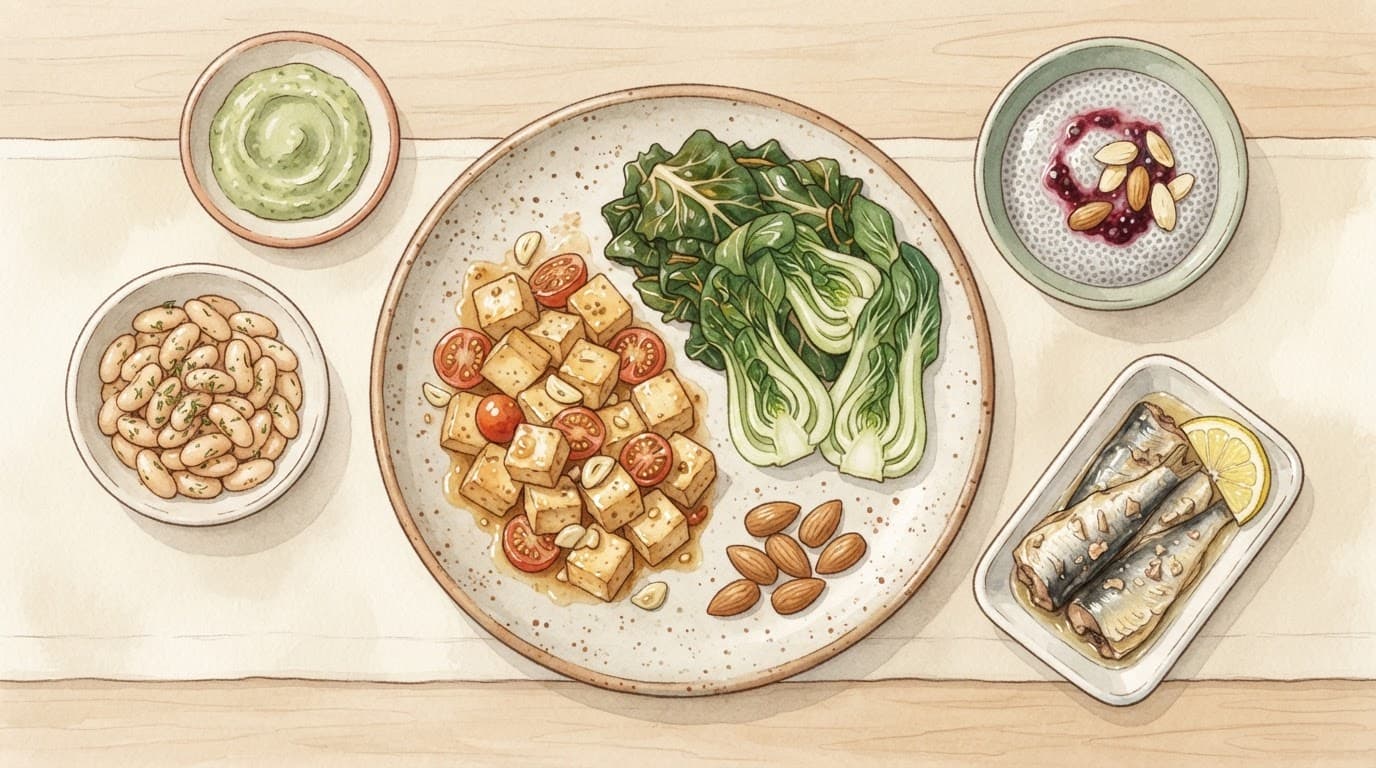
Here are useful amounts from common serving sizes.
| Food | Serving size | Approximate calcium |
|---|---|---|
| Cooked collard greens | 1 cup | 268 mg |
| Cooked bok choy | 1 cup | 160 mg |
| Canned sardines with bones | 3 ounces | 325 mg |
| Canned salmon with bones | 3 ounces | 181 mg |
| Calcium-set tofu | 1/2 cup | 253 mg |
| Fortified soy milk | 1 cup | 300 mg |
| Chia seeds | 1 tablespoon | 75 mg |
Serve the cooked greens as a side or in soup. Use the other vegetable in a quick stir-fry. Seeds offer a modest boost, but they work best as supplemental contributors rather than a primary source.
These values are approximate. Brand, fortification, serving size, and preparation can change them. The current NIH calcium fact sheet for health professionals includes a wider list of food sources and absorption details.
Calcium absorption also varies by food and meal, so these milligram values aren’t the whole story. The next section explains the main factors in more detail.
Fortified plant beverages and calcium-set options
Fortified plant beverages can be useful alternatives to dairy products, but their calcium and protein levels vary. Some provide substantial added calcium, while others provide little.
Check the Nutrition Facts label every time you buy a new brand. Shake the carton before pouring because added calcium can settle at the bottom.
Look for calcium sulfate in the ingredient list for the calcium-set entry. Packages without it may contain less calcium. It works well in stir-fries, soups, sheet-pan meals, and breakfast scrambles.
Sardines and salmon with edible bones
Canned fish with edible bones can contribute substantial calcium. The soft bones are safe to eat and provide much of the mineral.
Serve the fish on toast, or add it to a salad.
For women who don’t eat fish, beans, greens, seeds, and fortified drinks can still create a solid plan. The calcium-set option can fit into that plan too. You don’t need every food on the list. You need enough foods you enjoy and can keep buying.
Calcium absorption matters as much as the number
A food can look high in calcium on paper, but listed values are estimates. The amount your body absorbs varies by food.
Leafy green vegetables such as collard greens, bok choy, kale, and broccoli can be helpful lower-oxalate choices. Spinach contains calcium, but it isn’t one of the most reliable ways to meet your needs.
Why spinach is not the same as other greens
Spinach, Swiss chard, and rhubarb contain oxalates. These oxalates bind with calcium in the digestive tract, so less calcium is absorbed.
Spinach is still nutritious. It provides folate, vitamin K, and other nutrients. Because of those oxalates, spinach shouldn’t be your main calcium food.
Cooking may reduce some soluble oxalates, but it doesn’t make spinach equivalent to lower-oxalate greens. Choose cooked bok choy, kale, or broccoli when calcium is the goal. Rotate spinach into salads, eggs, soups, and smoothies because you like it, not because you are counting on it for bone health.
Vitamin D helps your body use calcium
It helps the body absorb calcium from the gut. Without enough, even a good diet may not support calcium use as effectively.
Adults ages 51 to 70 generally need 600 IU daily. Adults over 70 need 800 IU. The NIH guide to vitamin D explains why the nutrient supports calcium use and bone health.
Fatty fish, egg yolks, and fortified products can provide the nutrient. Some women need a supplement, especially with limited sun exposure or suspected deficiency. Ask your clinician about testing and a dose that fits your health history.
Build dairy-free calcium into regular meals
Trying to reach 1,200 mg at dinner is hard. A steadier approach adds one calcium source at breakfast, lunch, dinner, and one snack.
This helps women over 50 avoid the all-or-nothing eating pattern that often appears during busy weeks. Meals don’t have to be perfect. They need to be simple enough to repeat.
Start breakfast with one reliable source
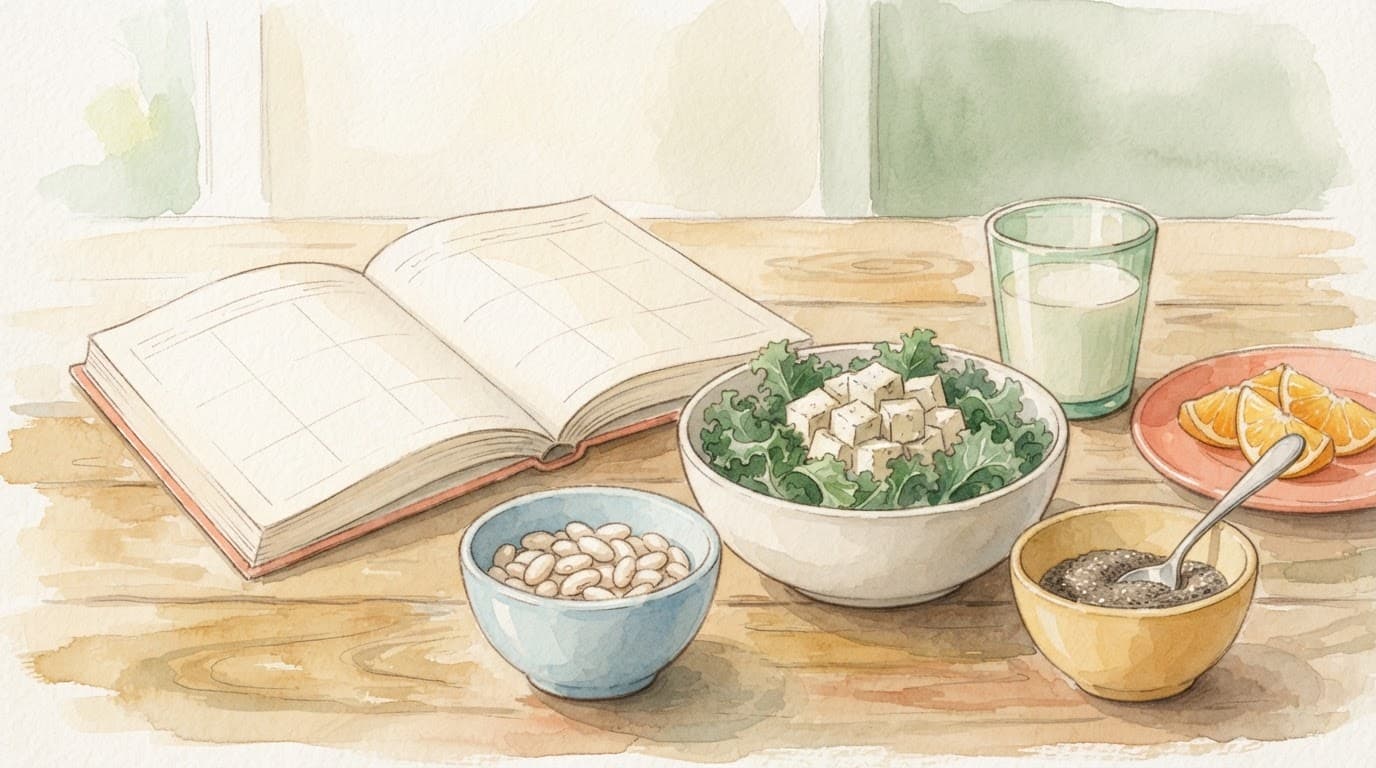
Build a smoothie with one cup of fortified soy milk, berries, and protein powder. Many varieties provide about 300 mg per cup, but check the label for the actual amount.
Stir chia seeds into a smoothie or oatmeal. One tablespoon contributes roughly 75 mg. One ounce of almonds adds about 75 mg, so both are modest contributors rather than stand-alone solutions.
If you use orange juice, choose a calcium-fortified version and check the label. Keep whole fruit as the usual choice for fiber and blood sugar support.
Make lunch, dinner, and a snack do more work
At lunch, add white beans to soup or a grain bowl, or make a tofu stir-fry with broccoli. Calcium-set tofu can vary substantially by brand, so use the Nutrition Facts panel for your estimate.
At dinner, try salmon cakes made with canned salmon and bones, or a grain bowl topped with sesame seeds. For a snack, edamame offers protein and can fit easily into a simple meal plan.
One practical day might start with about 300 mg from the breakfast drink, 75 mg from the seeds, and 75 mg from the nuts. Add label-based contributions from later meals and snacks. Several moderate portions can bring you closer to 1,200 mg, although brands and serving sizes prevent an exact total.
Calcium foods can support weight loss without dieting harder
Women trying to lose weight may cut food portions sharply. Aggressive calorie restriction can make it harder to get enough protein, calcium, iron, and fiber, and may lower calcium intake.
Weight loss after 50 is not helped by skipping meals and living on snack foods. A meal with protein, vegetables, healthy fats, and a calcium source is usually more filling than a low-calorie meal that leaves you hungry an hour later.
Choose foods that support fullness
Foods that provide calcium can fit into a weight-loss plan because they offer more than one nutrient. Protein and fiber can help reduce the urge to keep grazing.
Calcium itself does not cause fat loss. A balanced meal pattern can support satiety and nutrient adequacy, but it does not guarantee weight loss.
If sugar cravings hit in the afternoon, look at lunch first. A lunch built around protein and fiber often works better than trying to use willpower later.
When a calcium supplement may make sense
A supplement may help when a food and beverage review shows a persistent gap, appetite is poor, or dietary restrictions make adequate meals difficult. A low-intake day isn’t the same as a clinically identified calcium deficiency.
For adults over 50, the upper limit is 2,000 mg of calcium per day from food, beverages, and supplements combined. Ask a clinician to confirm what applies to you, since individual circumstances vary. More isn’t better.
Use supplements to fill a gap
Track your calcium intake across several ordinary days before buying a high-dose product. Count dietary calcium from meals and drinks before choosing a supplement dose, since one fortified drink, tofu serving, and vegetable side dish may cover more than expected.
Calcium can interact with thyroid medicines and some antibiotics. It may need to be separated from medications and split into smaller doses, based on the product and your clinician’s advice. The NIH consumer calcium guidance advises discussing medications and supplements with a health professional.
Discuss the need, form, dose, and timing with a healthcare professional. This is especially important for women with osteoporosis, a fracture history, kidney disease or stones, malabsorption, or relevant medication use. The goal is enough calcium, not the highest number possible.
Frequently Asked Questions
How much calcium do women over 50 need?
Women age 51 and older generally need 1,200 mg of calcium each day. This total includes calcium from foods, beverages, and supplements.
What are the best dairy-free sources of calcium?
Fortified soy milk, calcium-set tofu, cooked collard greens, bok choy, beans, seeds, sardines, and canned salmon with bones can all contribute. Check food labels because calcium amounts vary by brand, serving size, and fortification.
Is spinach a good calcium food?
Spinach contains calcium, but its oxalates bind to calcium and reduce how much your body absorbs. Choose lower-oxalate greens such as collards, bok choy, kale, or broccoli when calcium is the main goal.
Does vitamin D help with calcium absorption?
Yes. Vitamin D helps the gut absorb calcium, so adequate vitamin D supports the overall benefit of a calcium-rich eating pattern.
Should women over 50 take a calcium supplement?
A supplement may help when several ordinary days of food and beverage intake show a persistent gap. Discuss the need, dose, timing, and medication interactions with a healthcare professional, especially if you have kidney disease, kidney stones, osteoporosis, or a fracture history.
A steady plan for stronger bones
Non-dairy sources of calcium include fortified beverages, calcium-set tofu, beans, cooked greens, and fish with edible bones.
Spread calcium-containing foods across regular meals for consistent calcium intake. Pair the overall pattern with adequate protein and strength-building movement to support long-term bone health. Consult a healthcare professional before adding supplements.