
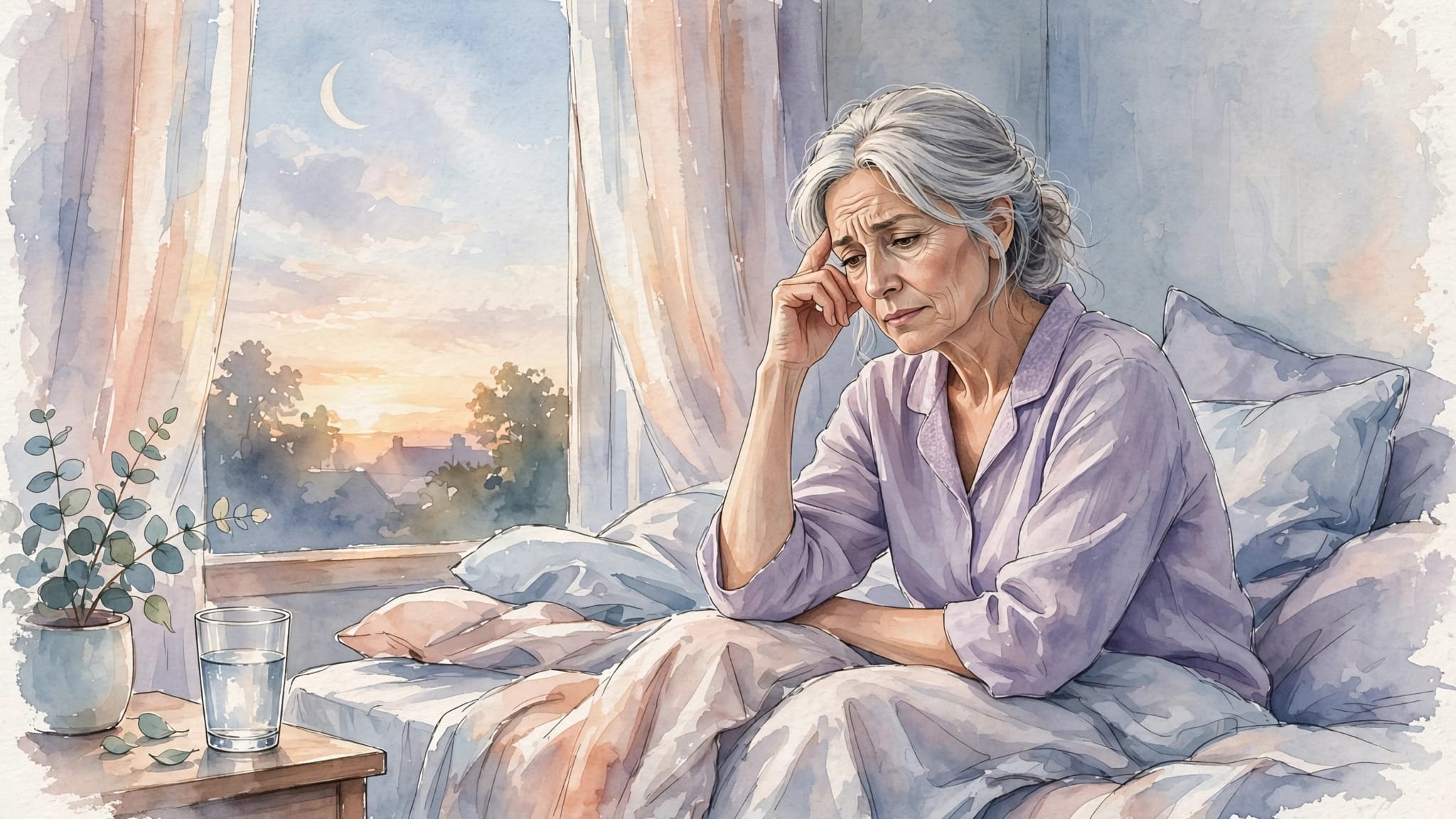
Waking up tired after a full night in bed isn’t something you have to accept as part of getting older. If you searched for “sleep apnea women” after months of poor sleep, headaches, brain fog, or chronic fatigue, your concern is worth discussing with a clinician, but these signs don’t prove a diagnosis.
Persistent symptoms deserve evaluation because undiagnosed sleep apnea can be subtle, especially in postmenopausal women. They can also have many other causes, including menopause, medication effects, anemia, depression, thyroid disease, or another condition affecting sleep. Sleep apnea is often missed because it doesn’t always look like loud snoring and dramatic gasping, and symptoms may blend into stress, weight changes, anxiety, or the belief that fatigue is simply normal now.
Key Takeaways
- Sleep apnea in women over 50 may appear as insomnia, fatigue, morning headaches, brain fog, mood changes, or fragmented sleep rather than loud snoring and obvious breathing pauses.
- Menopause symptoms, stress, medications, thyroid disease, anemia, and other conditions can look similar, so persistent symptoms deserve a clinical evaluation rather than self-diagnosis.
- A symptom diary can help you describe sleep disruption and daytime impairment, but only appropriate testing—at home or in a sleep lab—can confirm sleep apnea.
- A negative home test may not be the end of the evaluation if symptoms continue; follow-up testing or assessment for other sleep problems may be appropriate.
- Treatment, including CPAP therapy, oral appliances, and individualized supportive measures, can improve sleep and daytime functioning when obstructive sleep apnea is confirmed.
Why sleep apnea can be missed after menopause
Obstructive sleep apnea happens when throat muscles relax during sleep and the upper airway narrows or closes. This airway collapse reduces airflow and causes brief arousals, which help the brain restart breathing. You may not remember those awakenings, but repeated arousals interrupt sleep. Obstructive sleep apnea isn’t the same as ordinary fragmented sleep because breathing repeatedly becomes restricted.
For postmenopausal women, risk may change with age, anatomy, body-fat distribution, and hormonal changes. Hot flashes, night sweats, and insomnia can also make it harder to recognize another sleep problem.
The National Heart, Lung, and Blood Institute’s information on sleep apnea in women explains that women may report insomnia, fatigue, daytime sleepiness, morning headaches, anxiety, or depression rather than classic witnessed breathing pauses.
Fatigue is often tolerated for too long
Many women carry a lot. Work, family, caregiving, household tasks, and poor sleep can become one long cycle. You may push through the afternoon slump with coffee, sugar, or sheer determination.
That high tolerance for exhaustion can delay a diagnosis. Feeling tired every day isn’t a character flaw, and it isn’t proof that you need to try harder.
Weight is one risk factor, not the whole story
Weight gain around the midsection can raise the likelihood of this condition, but it is only one of several risk factors. It can affect women at any body size. Family history, craniofacial anatomy, nasal obstruction, alcohol or sedating medications, and cardiovascular or metabolic conditions can also matter.
Overweight women deserve good care without being told to lose weight before anyone investigates their symptoms. Weight loss may improve this condition for some people, but it isn’t required before evaluation or a substitute for treatment.
Menopause symptoms and sleep apnea symptoms can overlap, but overlap is a reason to ask more questions, not a reason to dismiss your sleep.
Sleep apnea women over 50 may have a different symptom pattern
The classic picture of sleep apnea is loud snoring, witnessed breathing pauses, and waking up choking. Those signs matter. But women over 50 may notice less stereotypical symptoms first, including insomnia, fragmented sleep, fatigue, headaches, or concentration problems.
A review of obstructive sleep apnea from a woman’s perspective describes how women may report insomnia, fatigue, and difficulty thinking clearly. These symptoms can occur with obstructive sleep apnea, even when no one has noticed breathing pauses at night. These sleep apnea symptoms can be easy to miss when no one sees what happens overnight.
Signs you may notice during the day
Poor-quality sleep can show up well beyond the bedroom. Consider bringing up these changes with your doctor if they happen often:
- You wake with a dry mouth, sore throat, morning headaches, or a heavy, unrefreshed feeling.
- Sleep feels broken, even if you cannot name a reason for waking.
- You struggle with concentration, memory lapses, mood changes, brain fog, irritability, or feeling down.
- You experience daytime sleepiness while reading, watching television, driving, or sitting after lunch.
- You wake to urinate several times, then have trouble falling asleep again.
- Your partner notices snoring, snorting, pauses in breathing, or sudden gasps.
Snoring alone doesn’t diagnose sleep apnea, and not having loud snoring, choking, or a partner to observe you doesn’t rule it out. Recurring symptoms deserve a clinical discussion about a possible sleep disorder.
Symptoms can look like stress or hormone changes
Women over 45 are often told that poor sleep, low mood, cravings, and memory problems are part of midlife. In postmenopausal women, hormonal changes can affect these experiences, but sleep apnea can too.
You may be doing your best with food, movement, and bedtime habits, yet still wake exhausted. When the usual explanation no longer fits, that pattern is useful information for your doctor.
What to bring up at your doctor’s appointment
You do not need to arrive with a sleep apnea diagnosis. Your job is to describe what’s happening, how often it happens, and how it affects daily life. This helps your clinician evaluate a possible sleep disorder.
Start with a simple sleep and symptom diary for one or two weeks. Record bedtime, wake time, nighttime awakenings, naps, alcohol, sedating medications, morning symptoms, unintentional dozing, and whether you experience daytime impairment. If a partner hears snoring or breathing pauses, include that too.
Questions that make the conversation clearer
You can ask direct questions without minimizing your concerns:
- “Could sleep apnea be part of why I wake up tired?”
- “Do my insomnia, headaches, and daytime fatigue suggest a problem with my sleep?”
- “Would a test done at home or an overnight sleep study be right for me?”
- “If testing confirms obstructive sleep apnea, might cpap therapy be appropriate?”
- “Could medications, congestion, menopause symptoms, or another condition also be affecting my sleep?”
- “If my test is negative but symptoms continue, what should we check next?”
A short record is often more helpful than trying to remember every bad night in the exam room. Include changes that may seem unrelated, such as high blood pressure, waking with heart pounding, reflux, changes in mood, or falling asleep unintentionally. These details don’t prove that one condition caused another, but they can help guide evaluation.
A symptom diary supports evaluation, but only appropriate testing can establish a diagnosis. Don’t drive or operate machinery when you’re dangerously sleepy. Contact a clinician promptly if this affects your safety.
Seek urgent medical care for severe shortness of breath while awake, chest pain, fainting, blue or gray lips, confusion, or another emergency symptom.
Do not wait for a partner to notice it
Living alone does not make sleep apnea less possible. Many women never hear themselves snore. Others sleep beside someone who does not notice brief breathing pauses.
You can also have sleep apnea without a dramatic choking sensation. Repeated small airway blockages and sleep disruptions still affect how restored you feel the next day.
How sleep apnea is diagnosed
A diagnostic evaluation is designed to identify obstructive sleep apnea, but symptoms alone can’t confirm it. A clinician may review your health history, medications, sleep habits, body measurements, blood pressure, airway, and nasal congestion. They may then refer you to a sleep specialist.
Testing may happen at home or in a sleep lab. A home sleep test commonly estimates breathing events, airflow, heart rate, blood oxygen, and respiratory effort during sleep. Blood oxygen is one part of the assessment and doesn’t independently diagnose the condition.
An in-lab polysomnography study, often called a sleep study, can capture more detailed sleep staging and additional signals. It also measures blood oxygen, which is one part of the assessment, not a standalone diagnosis. A lab study may be a better choice when certain risk factors are present. These include significant heart or lung disease, suspected other sleep disorders, severe insomnia, or a mismatch between symptoms and the home-test result.
Central sleep apnea is a separate breathing disorder in which the brain’s signals to breathe are disrupted. It differs from obstructive airway narrowing and requires clinician interpretation, not self-diagnosis.
The American Academy of Sleep Medicine diagnostic testing guideline states that questionnaires and prediction tools shouldn’t be used alone to make a diagnosis. A confirmed sleep apnea diagnosis requires appropriate testing.
Photo by Ron Lach
A negative home test is not always the end
If a home test doesn’t show obstructive sleep apnea but your symptoms remain strong, ask what comes next. A negative result may be insufficient for some patients, especially when sleep is fragmented or it doesn’t match how you feel.
Keep advocating for an answer. Insomnia, restless sleep, and daytime exhaustion still deserve care, even if sleep apnea is ruled out.
Follow-up may include an in-lab study or evaluation for insomnia, restless legs, medication effects, or mood disorders. Treatment decisions, including CPAP therapy, should follow appropriate confirmation and clinical review, not a symptom-based assumption.
Treatment can improve sleep, health, and daily energy
Untreated obstructive sleep apnea is associated with high blood pressure, heart disease, and type 2 diabetes. It can also affect mood, memory, relationships, and your confidence to exercise or enjoy daily life.
Sleep apnea treatment depends on your test results, the severity of obstructive sleep apnea, your symptoms, comorbidities, anatomy, and preferences. CPAP therapy is commonly recommended, but the best plan is individualized.
CPAP keeps the airway open
Continuous positive airway pressure, usually called CPAP, delivers gentle pressurized air through a mask while you sleep. CPAP therapy uses that pressure to help keep the airway open and prevent airway collapse.
CPAP therapy is highly effective for many patients when used as prescribed. Mask fit matters. So do dryness, pressure comfort, humidification, and nasal symptoms. If your equipment feels uncomfortable, ask for help rather than giving up.
Oral appliances and other options
Oral appliances may be considered for adults who prefer an alternative or can’t tolerate CPAP. A custom, titratable oral appliance, also called a mandibular advancement device, moves the lower jaw slightly forward to create more room in the airway. A qualified clinician and dentist should determine whether it’s suitable.
The joint AASM and AADSM oral appliance guideline recommends a custom, adjustable device fitted by a qualified dentist, with follow-up sleep testing to confirm it is working.
Other parts of treatment may include managing nasal congestion, changing sleep position, reviewing sedating medications, or addressing weight when appropriate. These measures support prescribed therapy rather than replace it, and some people need a combination of approaches.
Support your energy without blaming your body
Sleep apnea and midlife weight concerns often overlap. Poor sleep can increase hunger, sugar cravings, and the urge to reach for quick energy. It can also make regular movement feel harder than it should.
That doesn’t mean you failed at weight loss. Disrupted sleep, stress, hormonal changes, and less activity can affect appetite and contribute to weight gain.
Build meals that make tired days easier
As you begin or adjust to CPAP therapy, simple meals can make daily routines easier. Start with protein at breakfast, add fiber-rich vegetables or fruit, and include satisfying fats instead of relying on coffee and sweets to get through the afternoon.
The recipes in The Weight That Won’t Budge cookbook offer practical meal ideas for women over 45. It’s an optional general nutrition resource, not a medical treatment or a promise of weight loss. Dietary needs vary, so people with diabetes, kidney disease, or other conditions may need individualized advice.
Food can’t treat sleep apnea on its own. Balanced meals may support general well-being while you pursue evidence-based care with your doctor. They can’t replace sleep apnea treatment.
Frequently Asked Questions
Can women have sleep apnea without loud snoring?
Yes. Women may notice insomnia, fatigue, morning headaches, mood changes, or concentration problems instead of dramatic snoring or gasping. Not having a partner to observe you also does not rule out sleep apnea.
Are sleep apnea symptoms the same as menopause symptoms?
They can overlap, especially when poor sleep, fatigue, mood changes, and memory problems are involved. Overlap is a reason to discuss your symptoms with a clinician, not a reason to assume they are caused only by menopause.
How is sleep apnea diagnosed?
A clinician may review your symptoms, medical history, medications, airway, and risk factors before recommending a home sleep test or an overnight sleep study. Questionnaires and symptoms alone cannot confirm a diagnosis.
What should I do if my home sleep test is negative?
Ask your clinician what the result means if your symptoms remain strong or the test does not match how you feel. An in-lab study or evaluation for insomnia, restless legs, medication effects, mood disorders, or another condition may be appropriate.
What treatments are available for obstructive sleep apnea?
CPAP therapy is commonly recommended and uses gentle air pressure to help keep the airway open during sleep. Depending on your results and preferences, treatment may also include a custom oral appliance, management of nasal congestion, sleep-position changes, or other individualized measures.
A better night’s sleep starts with being heard
Obstructive sleep apnea in women over 50 can look like insomnia, headaches, fatigue, mood changes, or brain fog. It can also make your body feel harder to manage.
These sleep apnea symptoms deserve attention after menopause. Don’t brush them aside because you’re busy, menopausal, or trying to lose weight.
Track what’s happening and discuss it clearly with your doctor. Your clinician can decide whether a sleep study is appropriate, and whether cpap therapy may improve sleep and daytime functioning when indicated.
Seek urgent attention for severe breathing difficulty while awake, chest pain, fainting, blue lips, confusion, or an immediate risk of falling asleep while driving. Don’t wait to schedule a routine appointment in those situations.
Restful sleep is health care, not a luxury or a reward for doing everything perfectly.