
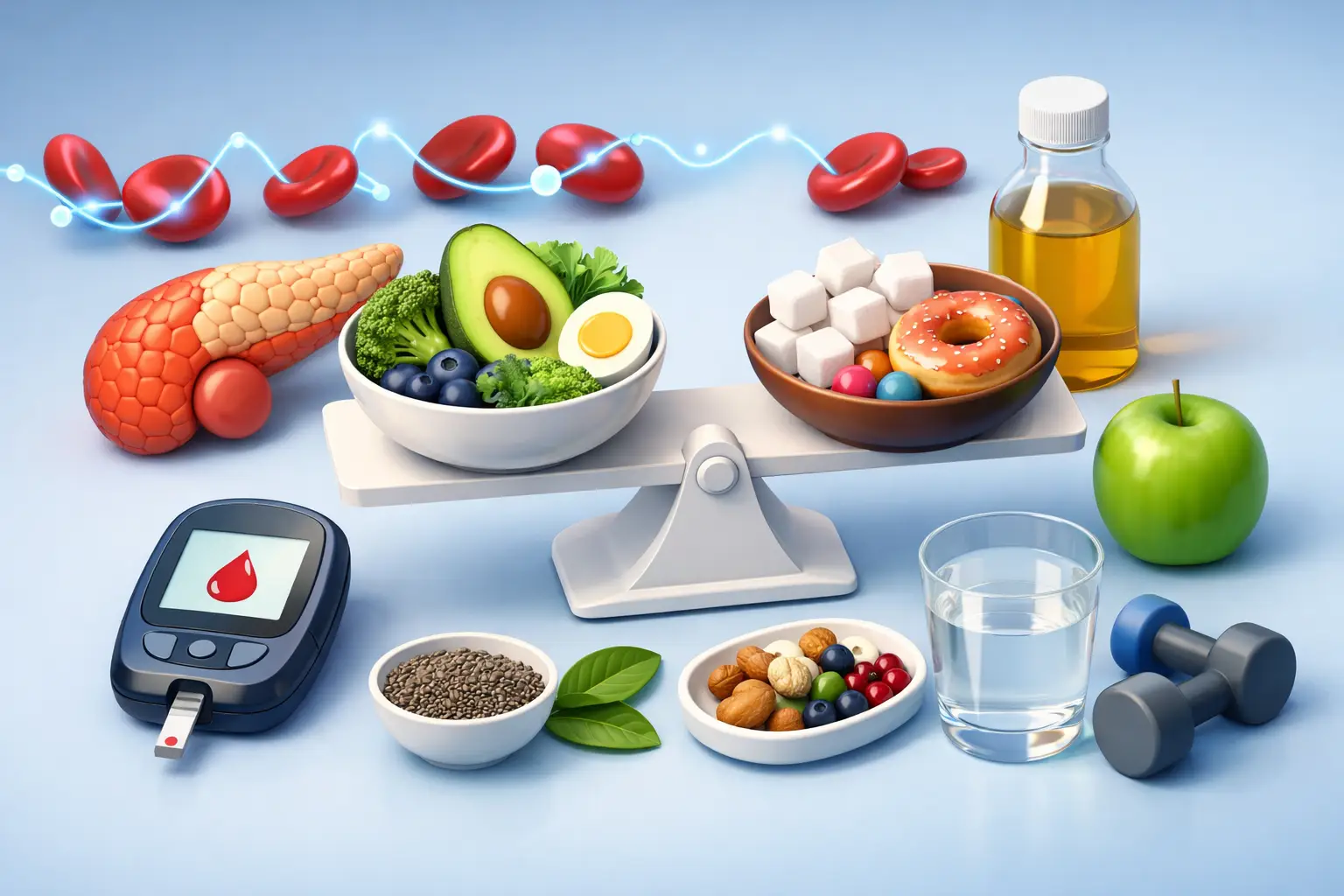
If you feel like your body started playing by different rules after 45, you are not imagining it. Learning how to balance blood sugar naturally can be one of the missing pieces, especially if you are eating “healthy” but still dealing with cravings, stubborn weight gain, energy crashes, and that wired-but-tired feeling that shows up in midlife.
This is where many women get blamed for a problem that is not about laziness or lack of discipline. Blood sugar swings can quietly drive hunger, fat storage, mood shifts, and fatigue. And when perimenopause or menopause enters the picture, your body often becomes less forgiving of long gaps between meals, carb-heavy snacks, poor sleep, and stress overload.
The good news is that balancing blood sugar does not require extreme dieting, cutting out every carb, or eating like a fitness influencer half your age. It usually starts with a few steady, repeatable habits that work with your hormones instead of against them.
Why blood sugar matters more in midlife
Blood sugar is simply the amount of glucose circulating in your bloodstream. Your body uses glucose for energy, but it needs help moving that glucose into your cells. That is where insulin comes in.
When blood sugar rises quickly and often, your body has to release more insulin to keep up. Over time, that can make it harder to manage appetite, energy, and weight. In midlife, lower estrogen can affect insulin sensitivity, which means the same breakfast or snack that never bothered you in your 30s may now leave you hungry again two hours later.
This is one reason traditional dieting often backfires for women over 45. A light yogurt for breakfast, a salad with barely any protein for lunch, and white-knuckling through the afternoon is not a blood sugar-friendly plan. It often leads to evening overeating, cravings, and a body that feels constantly stressed.
How to balance blood sugar naturally without overcomplicating it
The goal is not perfect numbers or rigid food rules. The goal is steadier energy, fewer cravings, better appetite control, and a body that feels more regulated. That happens when meals become more balanced and your daily routine stops sending mixed signals to your metabolism.
Start with protein early in the day
A carb-heavy breakfast is one of the fastest ways to set up a blood sugar roller coaster. Toast, cereal, muffins, and even many smoothies can spike blood sugar quickly, especially when they are low in protein and fiber.
A better approach is to anchor breakfast with protein first. Eggs, cottage cheese, Greek yogurt, a protein smoothie with chia seeds, or leftover chicken with sautéed vegetables may sound simple, but simple works. Many women notice that when breakfast includes 25 to 30 grams of protein, they stay full longer and stop thinking about food all morning.
This does not mean breakfast needs to be huge. It just needs to be more stabilizing than coffee and a banana.
Build meals around protein, fiber, and healthy fat
If you want to know how to balance blood sugar naturally at lunch and dinner, this is the core formula. Protein slows digestion, fiber helps reduce sharp glucose spikes, and healthy fat adds staying power.
Think of meals in practical terms. Instead of pasta as the center of the plate, build around salmon, chicken, turkey, tofu, or beef, then add vegetables and a smart portion of carbs. Instead of a plain baked potato, pair it with steak and roasted broccoli with olive oil. Instead of crackers and cheese for lunch, try a big salad with grilled protein, avocado, and beans.
Carbs are not the enemy here. The issue is usually eating them alone or in portions that your body does not handle well right now. Pairing carbs with protein and fat changes the blood sugar response in a meaningful way.
Stop skipping meals and then overeating later
Many women in midlife are trying to eat less and ending up under-fueled during the day. Then 4 p.m. hits, cravings kick in, and dinner becomes a clean-up operation for low blood sugar and stress.
If this pattern sounds familiar, your body may need more consistency, not more restriction. Going too long without eating can raise stress hormones and make you more likely to grab fast carbs when your energy drops.
That does not mean everyone needs to snack constantly. It means your meal timing should work for your body. For some women, three balanced meals are enough. Others do better with a protein-rich snack between lunch and dinner. A boiled egg, turkey roll-ups, apple slices with nut butter, or plain Greek yogurt can prevent the late-day crash.
Be smarter about the carbs you choose
You do not need to fear fruit or swear off sweet potatoes forever. But you may need to choose carbs that digest more slowly and pay attention to how much you eat at one time.
Beans, lentils, berries, oats, quinoa, sweet potatoes, and higher-fiber wraps tend to be gentler on blood sugar than pastries, chips, white bread, juice, or sugary granola bars. Even so, portion and pairing still matter. Oatmeal by itself may leave you hungry. Oatmeal with protein powder, walnuts, and berries is a different story.
The same food can work well in one context and poorly in another. That is why rigid good-food bad-food thinking rarely helps. Your body responds to the whole meal, not just the carb.
Lifestyle habits that support steady blood sugar
Food matters, but it is not the whole picture. Blood sugar is also shaped by sleep, stress, and movement. This is especially true in midlife, when your system is already dealing with hormonal change.
Walk after meals when you can
You do not need a punishing workout to help blood sugar. A simple 10 to 15 minute walk after a meal can help your body use glucose more efficiently. That can mean fewer spikes, better digestion, and more stable energy.
This is one of the most underrated strategies because it feels almost too basic. But basic does not mean ineffective. A short walk after dinner is often more helpful for blood sugar than another exhausting workout that leaves you depleted.
Protect your sleep
A bad night of sleep can make you hungrier, more insulin resistant, and more likely to crave sugar the next day. That is not a character flaw. It is biology.
If sleep is off, start with what is realistic. Keep a regular bedtime, reduce late-night scrolling, eat dinner a little earlier if large evening meals affect sleep, and be cautious with alcohol. For many women, alcohol has a stronger impact in midlife than it used to, especially on sleep quality and next-day blood sugar control.
Lower the stress load where you can
Chronic stress raises cortisol, and cortisol can push blood sugar higher. That does not mean you need a perfect stress-free life. Most women over 45 are juggling work, family, aging parents, and their own shifting health. The answer is not to meditate for an hour and hope for the best.
It is to create small points of regulation during the day. Slow breathing before meals, a quick walk between meetings, strength training a few times a week, or saying no to one extra obligation can all help. Blood sugar balance is not just about what is on your plate. It is also about the signals your body gets from your daily life.
Common mistakes when trying to balance blood sugar naturally
One mistake is assuming healthy foods are automatically blood sugar-friendly. A smoothie bowl, granola, dried fruit, and honey may look healthy, but they can still hit your system fast.
Another is under-eating protein because diet culture taught you to fear substantial meals. Many midlife women need more protein than they realize, especially if they want better body composition and fewer cravings.
A third is trying to fix everything by cutting carbs aggressively. Some women feel better with fewer refined carbs, but going too low can backfire if it increases stress, worsens sleep, or leads to binge-restrict cycles. Balance is the goal, not punishment.
What progress actually looks like
Balanced blood sugar does not always announce itself with dramatic weight loss in a week. Sometimes it shows up as fewer afternoon cravings, better focus, a calmer appetite, or waking up less hungry in the middle of the night.
Those changes matter. They are often the first signs that your body is feeling safer and more stable. And when that happens consistently, weight loss can become easier because your system is no longer constantly fighting to catch up.
If you have been blaming yourself, this is your reminder that you are not broken. Your body may simply need a more hormone-smart approach than the one you were handed years ago. Start with one meal, one walk, one better breakfast. Small changes done consistently can shift more than another round of dieting ever did.
If you want support that speaks directly to this season of life, The Weight That Won’t Budge is built around exactly that kind of practical, real-life guidance.
The Weight That Won’t Budge Cookbook
This content is for informational purposes only and is not intended as medical advice.